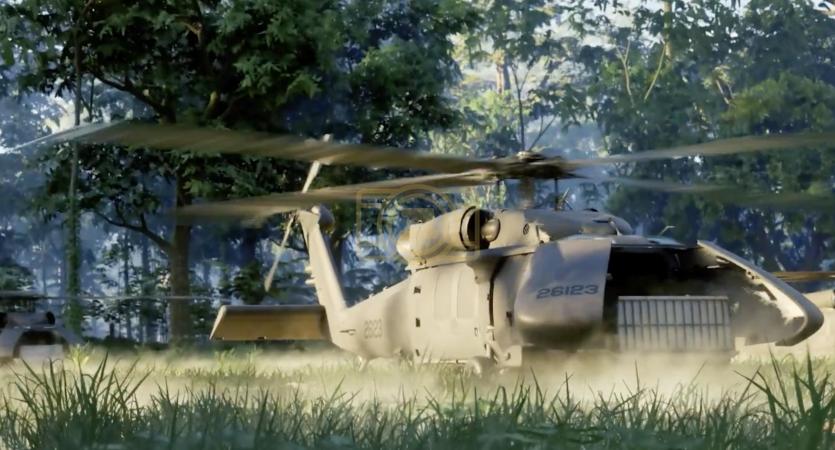
DRONE MOTHERSHIP IN THE MAKING: Sikorsky U-Hawk Built To Carry Launched Effects
Gallery
Videos
One of the world's most famous helicopters is about to lose its pilots. In roughly 10 months, Sikorsky, a Lockheed Martin company, turned a proven UH-60L Black Hawk into the uncrewed S-70UAS U-Hawk, a conversion the company unveiled at the AUSA conference in October 2025 and is now taking toward flight testing, with a first flight planned before the end of 2026. The cockpit, seats, and crew stations are gone, replaced by clamshell doors and a loading ramp that give the aircraft about 25 percent more cargo space than a standard Black Hawk. Flying it falls to a third-generation fly-by-wire system paired with Sikorsky's MATRIX autonomy technology, which builds a flight plan from a mission an operator enters on a tablet.
The pitch for the U-Hawk is about staying ahead in a battlespace that keeps changing, with the helicopter teaming up with crewed aircraft and other uncrewed systems instead of replacing them outright. Sikorsky says it can carry launched effects, which are drones released from the aircraft, and can drive uncrewed ground vehicles off its ramp, with company figures of up to 1,600 nautical miles self-deployed or about 14 hours of loiter time. Sikorsky also says it shares commonality with the existing UH-60 fleet, which it argues keeps the Black Hawk's proven reliability while cutting operating costs. The company sees interest from the U.S. Army and allied European customers, and has talked about ramping up production in 2026 with deliveries in 2027, though those are plans, not promises. The big question now is whether a helicopter with nobody on board can live up to the legend once it actually leaves the ground.