DIRTY BOMB THREAT EXPLAINED: Could Iran Use a Radioactive Weapon Against American Targets?
Gallery
Videos
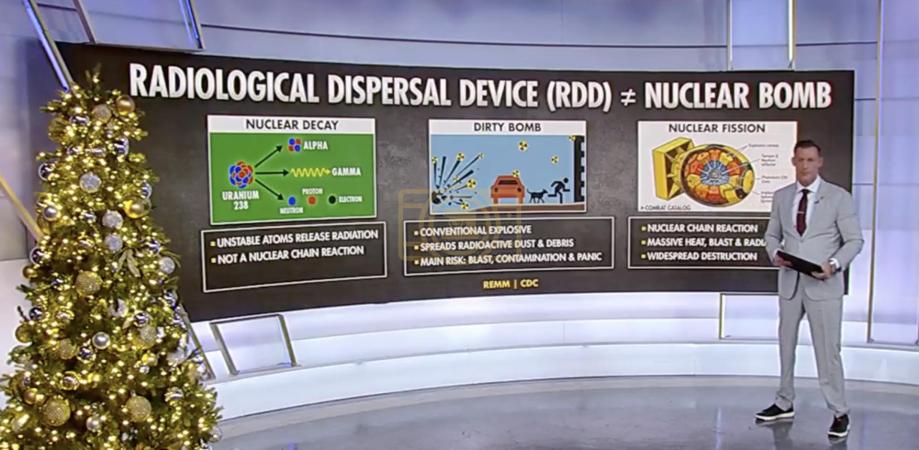
As concerns grow over potential Iranian attacks against the United States, Fox News contributor Johnny "Joey" Jones is explaining the dangers of a weapon that could cause widespread disruption without producing a nuclear explosion. Appearing on The Big Weekend Show, Jones broke down the difference between a conventional nuclear weapon and a so-called dirty bomb, also known as a radiological dispersal device. Unlike an atomic bomb, which releases enormous energy through a nuclear chain reaction, a dirty bomb combines conventional explosives with radioactive material to spread contamination across an affected area. Its immediate destructive force comes primarily from the explosion itself, while the radioactive material creates additional health risks and can make buildings, streets and other public spaces unsafe. Depending on the material involved, the weather and the extent of contamination, authorities could be forced to evacuate affected areas, restrict public access and undertake expensive decontamination operations. The Nuclear Regulatory Commission describes such devices as weapons of mass disruption because fear, contamination and the resulting disruption can be more significant than immediate radiation-related injuries.
The discussion comes as U.S. intelligence reportedly indicates that Iran has been exploring potential dirty bomb or chemical weapons attack scenarios targeting senior Trump administration officials in Washington, D.C. A November 16 CNN report, citing seven U.S. officials familiar with the intelligence, said the reported planning included specific locations and potential targets, prompting heightened security measures and contingency preparations. However, officials reportedly characterized the activity as an effort to develop possible attack options rather than evidence that an operation was imminent, and there was disagreement over whether Iran had the capability or intention to carry it out. White House spokesperson Lauren Bis said the administration was monitoring potential threats but emphasized that there were no credible threats to the U.S. homeland at that time. Iran's diplomatic mission to the United Nations rejected the chemical weapons allegations, calling them false, while the Office of the Director of National Intelligence declined to comment on the reported intelligence. The revelations have nevertheless placed renewed attention on the threat of unconventional attacks and the importance of preparing for scenarios that could endanger American civilians and government personnel.