CUTTING THE SUPPLY LINE: Marines Storm and Sink Cartel Refueling Vessel
Gallery
Videos
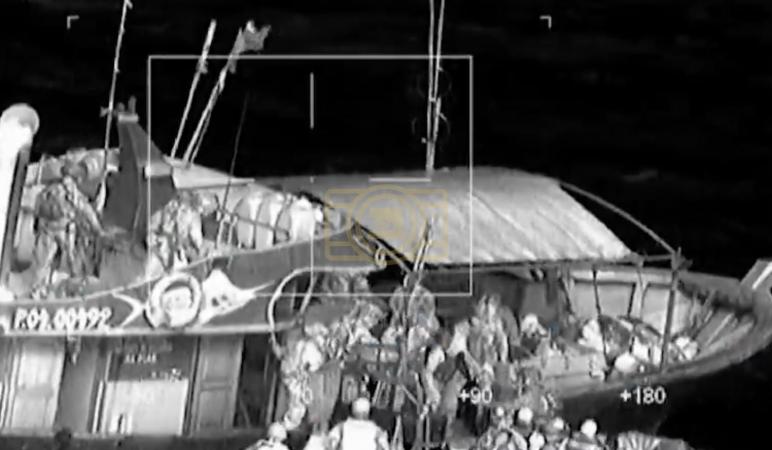
U.S. Southern Command announced Friday that American forces successfully interdicted and sank a vessel functioning as a floating refueling station for at-sea drug trafficking operations, dealing what officials describe as a major setback to cartel logistics in the region. The operation took place on August 28 in international waters of the Eastern Pacific, carried out by Joint Task Force Western Hemisphere in coordination with the Ecuadorian government. Marines and sailors launched from the USS San Antonio tracked, boarded, and cleared the vessel without any resistance or incident. Everyone removed from the ship was safely escorted back to Ecuador before U.S. forces sank the vessel.
According to SOUTHCOM, intelligence had already linked the ship to Los Choneros, a violent Ecuadorian criminal organization the U.S. government has formally designated as a narco-terrorist group. The vessel had reportedly been previously identified and targeted under Department of Treasury sanctions before this operation took place, suggesting authorities had been tracking it for some time. Officials described the ship's role as critical to keeping smaller drug-trafficking boats fueled and operational across the region, effectively serving as a logistics hub rather than a vessel directly carrying narcotics. That distinction mattered to military officials, who characterized the strike as targeting the broader support network behind trafficking operations rather than a single, easily replaced boat.
SOUTHCOM Commander Gen. Francis L. Donovan framed the operation in forceful terms, saying it fractured what he called a primary artery in the region's illicit logistics chain. He credited the mission's success to the coordinated efforts of the Joint Force, specifically highlighting the professionalism of the Marines and Sailors involved in executing the interdiction. Donovan also emphasized the importance of the partnership with Ecuadorian authorities, describing the joint effort as a clear example of what the Americas Counter Cartel Coalition can accomplish when regional partners work together. He reiterated that the broader campaign remains focused on dismantling the operational capabilities that allow narco-terrorist networks to keep moving drugs through the region.
This latest strike follows a string of escalating U.S. military actions in and around Ecuador over the past several weeks, including reports of Green Beret units conducting joint operations against cartels near the Colombian border. The U.S. also resumed airstrikes on suspected small drug boats in the region earlier in August after a brief pause, sinking at least one vessel in a separate incident days before this latest operation. Taken together, officials say these actions reflect a broader, sustained push to target not just individual smuggling boats, but the wider logistical infrastructure, refueling ships, sanctioned suppliers, and support networks, that keeps narco-trafficking operations running across Western Hemisphere waters.