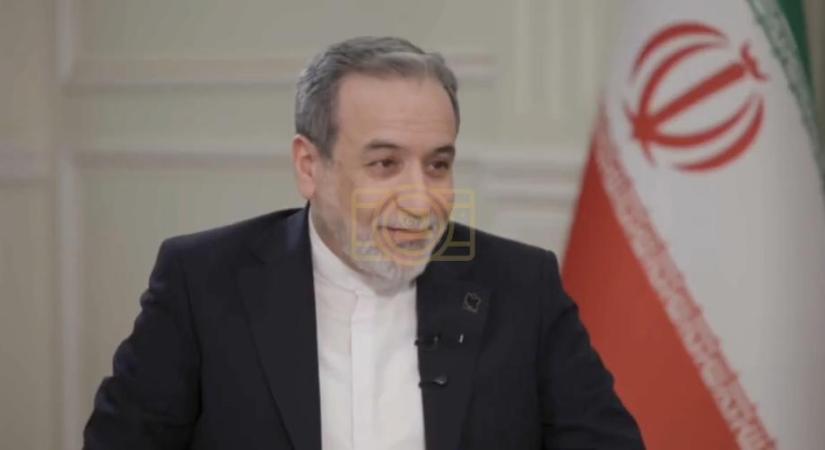
Iran FM Araghchi Says U.S. “Cannot Be Trusted" After The Strike.
Gallery
Videos
Iranian Foreign Minister Abbas Araghchi declared that Tehran does not fully trust the United States, citing what he described as a betrayal during ongoing diplomatic negotiations. “We don’t fully trust the U.S., we were in the middle of negotiations when they attacked us,” Araghchi said, referencing the June 2025 Israeli strike on Iranian targets that occurred after a U.S.-imposed 60-day deadline for nuclear negotiations expired without agreement.
The remarks come amid continuing diplomatic contacts hosted in Oman throughout 2025 and into 2026, aimed at addressing Iran’s nuclear program and broader regional tensions. The talks have centered on uranium enrichment levels, sanctions relief, and verification mechanisms. Washington has pressed for stricter limits on enrichment capacity, while Tehran insists on maintaining what it calls its sovereign right to enrich uranium for peaceful purposes, including electricity generation and medical isotope production.
The June 2025 strike marked a turning point in the negotiation climate. Although carried out by Israel, Iranian officials have consistently linked the escalation to U.S. pressure and regional alignment, arguing that the timing undermined diplomatic momentum. Tehran has since hardened its public posture, emphasizing deterrence and warning that any future attack would trigger retaliation, including potential strikes on American military assets in the region.
From Washington’s perspective, concerns remain centered on Iran’s enrichment levels, stockpiles, and advanced centrifuge deployment, which U.S. officials argue shorten breakout timelines. U.S. negotiators have framed their position as focused on preventing weaponization while leaving room for civilian nuclear activity under stringent monitoring. However, mutual distrust continues to complicate efforts to revive or replace prior frameworks.
Araghchi’s comments highlight the fragility of the current diplomatic track. Iran maintains that negotiations must proceed without coercion or military pressure, while signaling that it will not accept terms perceived as one-sided. The rhetorical escalation underscores how security incidents and diplomatic timelines are increasingly intertwined.
The broader regional context further complicates the picture. Israel has repeatedly signaled it will not tolerate what it views as an existential nuclear threat, maintaining readiness for independent action. Meanwhile, Gulf states and European actors closely monitor the negotiations, concerned about both nuclear proliferation risks and the possibility of wider conflict.
As talks continue under Omani mediation, the central obstacle remains trust. Iran’s leadership argues that previous agreements were not honored in full, while the United States and its partners seek enforceable guarantees that Iran’s nuclear program remains exclusively peaceful. Whether the current diplomatic channel can withstand renewed pressure will depend on both sides’ willingness to balance deterrence with compromise.
For now, Araghchi’s statement signals that Tehran intends to negotiate from a position of caution, pairing diplomacy with explicit warnings. The outcome of these talks will have significant implications for regional stability, U.S.-Iran relations, and the future architecture of nuclear nonproliferation in the Middle East.