New Fed Chair Kevin Warsh Refuses to Spoon-Feed Markets After Yield Spike.
Gallery
Videos
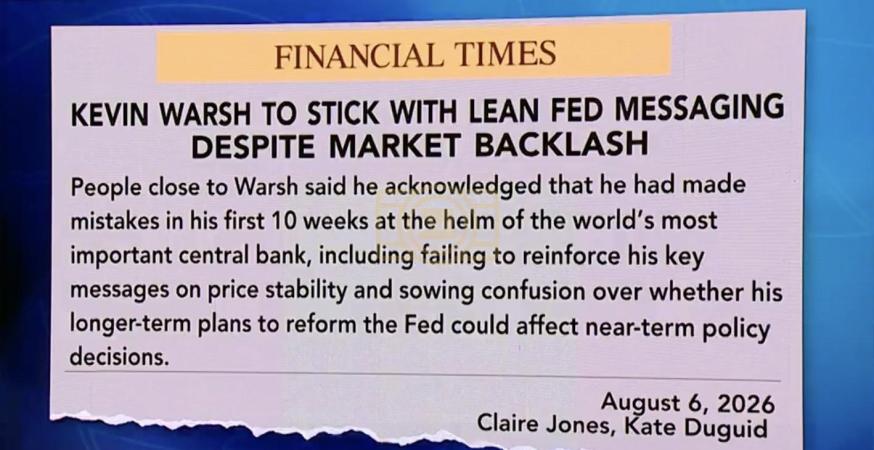
Fed Chair Warsh Stands Firm on Lean Messaging Despite Treasury Selloff
Federal Reserve Chairman Kevin Warsh is prepared to stick with his revised, minimalist communications style even after a sharp selloff in U.S. Treasuries following last week’s policy meeting. According to reports, the new chair intends to continue issuing shorter statements and providing less forward guidance to markets. Warsh, who assumed the role in mid-2026, has acknowledged some early stumbles in reinforcing the price-stability message during his first weeks on the job. He views the reduced signaling as a deliberate and necessary shift that allows markets to respond directly to incoming economic data rather than Fed hand-holding.
The approach has already contributed to rising yields across the Treasury curve, including a notable climb in the 30-year yield. Investors appear to be seeking clearer direction amid inflation that remains above the Federal Reserve’s 2 percent target. Warsh’s strategy marks a clear departure from the more expansive guidance provided by previous chairs. By stepping back from detailed forecasts and prolonged explanations, he aims to restore a sharper focus on actual economic conditions and the central bank’s core mandate.
Supporters of the change argue that excessive forward guidance in recent years encouraged markets to become overly dependent on central bank cues instead of independent analysis. Warsh’s preference for letting data speak for itself aligns with a broader push for greater discipline and less market coddling. The early volatility in bonds is being treated as an adjustment period rather than a reason to reverse course. The chair’s commitment to price stability remains the central priority even as communication tactics evolve.
As Warsh settles into the role, his willingness to absorb short-term market pushback signals confidence in the longer-term benefits of the new style. American families and businesses ultimately benefit most from a Federal Reserve focused on controlling inflation and maintaining credibility rather than managing every market fluctuation through carefully scripted signals. The coming months, including key speeches and data releases, will test whether the leaner approach delivers the clearer, more data-driven policymaking Warsh intends.