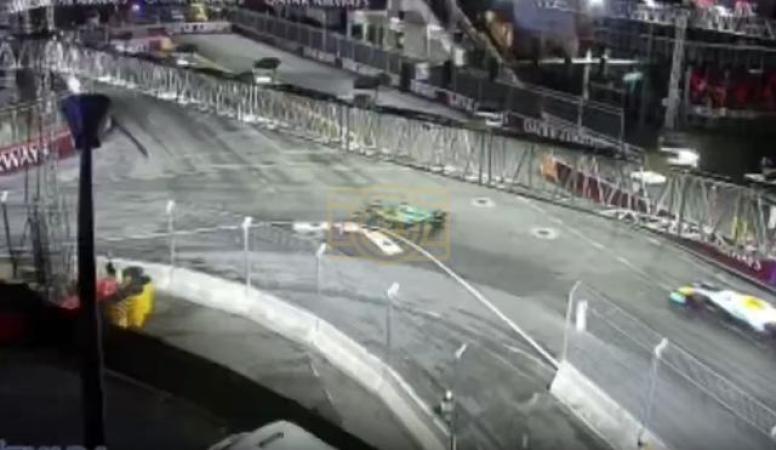
Viral Hack: Fans Watch Las Vegas F1 Free Through Public Cameras.

Gallery
Videos
During the Formula 1 Las Vegas Grand Prix on November 22, 2025, thousands of fans discovered a creative—and completely unintended—way to watch one of the world’s most expensive sporting events without spending a dollar. Instead of purchasing cable subscriptions, streaming packages, or race-day tickets starting at $500 and soaring past $10,000 for VIP access, viewers tuned into publicly available traffic cameras positioned along the Las Vegas Strip.
Viral clips circulating online showed fans jumping between live feeds, capturing race cars weaving past neon hotels, casinos, pedestrian walkways, and packed grandstands—all from angles traditional broadcasters never showed. The camera views weren’t crisp, cinematic, or commercial, but they offered something the official broadcast did not: free accessibility.
This unexpected workaround highlighted a growing frustration among sports fans—elite entertainment continues to rise in cost, placing major events behind paywalls or pricing everyday people out of attendance. The Las Vegas Grand Prix, heavily marketed as a luxury spectacle, became a symbol of that divide. Instead of surrendering, the public found a loophole.
City officials and organizers have not yet announced whether access to these cameras will be restricted in future races, but the moment exposed the tension between public infrastructure, corporate profit, and digital-era innovation. What exists for traffic monitoring suddenly became a democratized viewing platform.
For many online observers, the trend carried a simple message: when corporations make live experiences unaffordable, regular people will find a way to participate anyway. And in a weekend dominated by flashy sponsors, private suites, and exclusive viewing decks, it was the everyday fan—armed with curiosity and Wi-Fi—who stole the show.