Trump Explains Choosing Delcy Rodríguez Over Machado to Preserve Stability.
Gallery
Videos
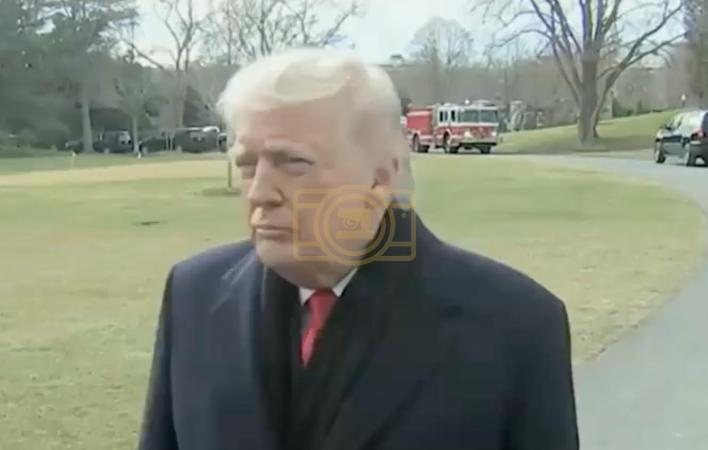
President Donald Trump provided a striking explanation for why his administration is aligning with Venezuela’s interim leader, Delcy Rodríguez, rather than fully backing opposition figure María Corina Machado, citing lessons learned from the U.S. experience in Iraq.
During remarks to reporters on January 16, 2026, Trump directly referenced the aftermath of the 2003 Iraq War, saying that removing entire security structures without a viable replacement enabled chaos and ultimately contributed to the rise of ISIS. “If you ever remember a place called Iraq, where everybody was fired—every single person, the police, the generals—everybody was fired, and they ended up being ISIS,” Trump said when asked why he was choosing to work with Rodríguez instead of Machado. “Instead of just getting down to business, they ended up being ISIS.”
Trump’s comments reflect a strategic calculus at the highest level of U.S. policy following the January 3, 2026 U.S. military operation that captured Venezuelan President Nicolás Maduro and paved the way for a transition period in Caracas. After Maduro’s capture, the Venezuelan Constitutional Chamber of the Supreme Tribunal of Justice installed Maduro’s vice president, Delcy Rodríguez, as acting president — a move recognized by the Trump administration as part of efforts to maintain immediate stability.
The president stressed that his approach is intended to prevent a power vacuum that could undermine security and open the door to further extremist resurgence or violent unrest. He underscored that he had met with the opposition leader María Corina Machado on January 15 and described her as “a fine woman,” noting the Nobel Peace Prize she presented him during the meeting. Still, he reiterated that Machado — despite her prominence and international support — did not, in his assessment, command the necessary internal support or structural leverage to ensure stability at this historic moment.
Under U.S. policy direction, Rodríguez has been engaged in dialogue with senior U.S. officials, including meetings with CIA Director John Ratcliffe, as part of an effort to forge cooperation on oil, trade, and national security priorities. Washington’s strategy appears to balance near-term stability with longer-term pressure for democratic reforms and economic normalcy.
The decision to work with Rodríguez rather than Machado has drawn criticism from some opposition sectors and international observers who argue that supporting a figure closely tied to the former Maduro regime complicates the democratic aspirations of Venezuelans. Yet, Trump’s references to historical lessons from Iraq signal his administration’s priority: preventing institutional collapse and maintaining order during a volatile political transition in Venezuela’s post-Maduro era.