A DIFFERENT DRONE WAR: Yemen's Battlefield Tactics Break From Ukraine's Model
Gallery
Videos
Yemen's fragile, years-long truce has continued unraveling in recent weeks, with renewed clashes between Houthi rebels and Saudi-backed Yemeni government forces producing a wave of drone-based attacks along multiple front lines. Fighting has intensified particularly around Marib and Hadramout, two government strongholds that have come under repeated missile and drone bombardment since early July. Yemeni officials say Houthi attacks have killed dozens of soldiers in a single strike alone, while government forces have responded with counteroffensives targeting Houthi positions along the Maqbanah front west of Taiz and elsewhere. Both sides have released footage from the exchanges, offering a rare, detailed look at how drone warfare is actually being conducted on Yemen's battlefields.
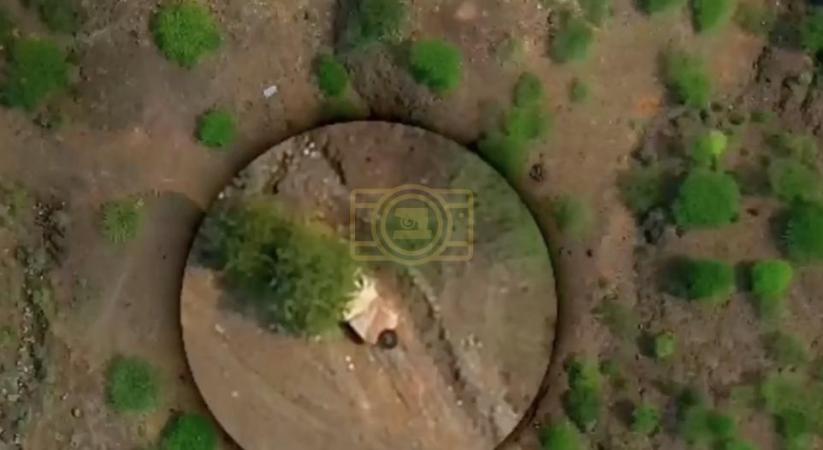
Open-source military analysts tracking the footage have pointed to an interesting pattern in how drones are being used compared to other modern conflicts, particularly Ukraine. According to this analysis, the "drone drop" technique, in which a drone releases a munition rather than detonating on impact, has become a preferred method in Yemen due to a combination of factors: weaker electronic warfare defenses on the ground and a limited capacity among combatants to mass-produce cheap FPV, or first-person-view, kamikaze drones. This approach allows operators to preserve their drones for repeated use rather than sacrificing them in a single strike, a meaningful advantage in a conflict where drone supply chains remain far more constrained than in larger, more industrialized wars.
That stands in contrast to how the tactic has evolved in Ukraine, where "drone drop" strikes made up the majority of drone warfare early in the conflict during 2022 and 2023, but have since been overtaken by other methods. In Ukraine, heavy bomber-style drones, some capable of carrying large-caliber munitions such as 152mm or 155mm artillery shells, have become the dominant delivery method for drone-based strikes, reflecting a far more mature and resource-intensive drone ecosystem. The differences highlight how drone warfare tends to adapt to the specific resources, electronic warfare capabilities, and production capacity available to each side in a given conflict, rather than following a single universal pattern.
Yemen's conflict also continues to showcase a broader range of drone technology beyond small tactical strikes, including larger kamikaze drones used by the Houthis in attacks on Saudi Arabia, naval drones deployed against maritime targets, and medium-to-high-altitude long-endurance drones operated by American, Saudi, and Emirati forces. Notably, smaller FPV drones and the "drone drop" method specifically have historically been far less common in Yemen compared to other modern conflicts, a gap that appears to be narrowing as fighting resumes and both sides adapt their tactics. As the ceasefire that has held since 2022 continues to erode, the battlefield footage emerging from Marib and surrounding areas offers a revealing window into how drone warfare doctrine is being reshaped in real time under Yemen's specific operational constraints.