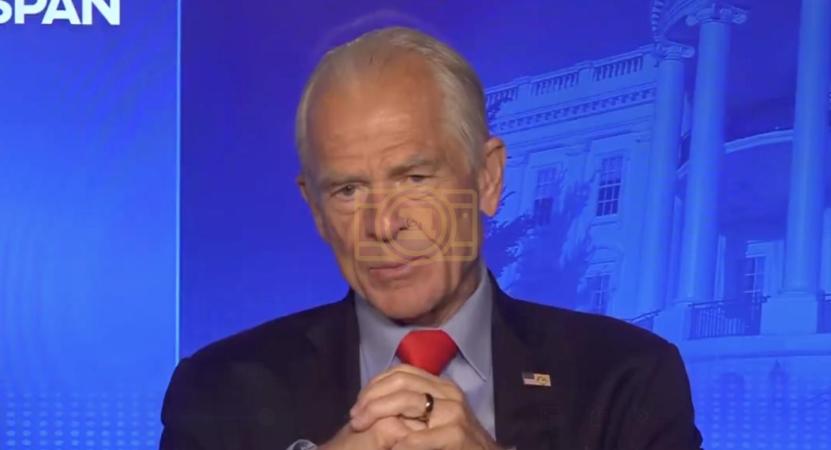
DEAL WARNING: Senior Trade Adviser Peter Navarro Says USMCA Must Transform or Disappear.
Gallery
Videos
Peter Navarro has delivered a blunt assessment of the future of the United States-Mexico-Canada Agreement. “There’s going to be substantial changes to USMCA or USMCA is not going to be around,” the White House Senior Counselor for Trade stated during a discussion of U.S.-Canada trade tensions. The remark leaves little room for ambiguity about the administration’s stance. Navarro framed the choice as binary: deep revisions or the possible end of the pact itself. His comments place immediate pressure on the existing trade framework that has governed North American commerce for years.
The statement aligns with a decision taken by the Trump administration in July 2026. At that time the administration rejected a proposed 16-year extension of USMCA. The rejection activated a schedule of annual reviews that will continue through 2036. Current terms remain in force on a temporary basis while those reviews proceed. The move effectively keeps the agreement alive but under constant scrutiny and the threat of further alteration or termination.
Navarro is using his position to advocate for specific policy shifts inside the agreement. He is pushing for higher U.S.-specific content requirements in the automotive sector. He also seeks measures aimed at reducing U.S. trade deficits with the partner countries. A third priority is the creation of stronger barriers against Chinese goods that enter the United States by transshipping through Mexico or Canada. These goals reflect a broader effort to reshape the commercial relationship in favor of greater domestic production and tighter control over supply chains.
The focus on automotive rules is particularly significant because the sector forms a large share of North American trade. Raising the required percentage of U.S. content would force manufacturers to adjust sourcing and production patterns. Efforts to block Chinese transshipment target what the administration views as a loophole that undermines the intent of the original agreement. Together the proposed changes would alter the cost structure and competitive balance across the three economies. Navarro presents them as necessary corrections rather than optional improvements.
U.S.-Canada trade tensions provided the immediate backdrop for Navarro’s remarks. By speaking publicly and in forceful terms, he signaled that the annual review process will not be treated as a routine formality. The administration appears prepared to use the leverage created by the rejected extension to extract concessions. Whether Canada and Mexico will accept the scale of changes Navarro envisions remains an open question. The coming rounds of review will test the willingness of all three parties to renegotiate core provisions.
Navarro’s warning crystallizes the administration’s approach: the status quo is unacceptable and substantial revision is non-negotiable. If those revisions cannot be secured, the agreement itself could be allowed to lapse. The combination of annual reviews, temporary continuation of current terms, and clear demands on content rules, deficits, and Chinese goods creates a high-stakes environment for North American trade. Businesses and governments on all sides now face a prolonged period of uncertainty as the future of USMCA is actively contested.