THE $400 BILLION PIVOT: Putin Unveils Plan to Bypass Western Banks
Gallery
Videos
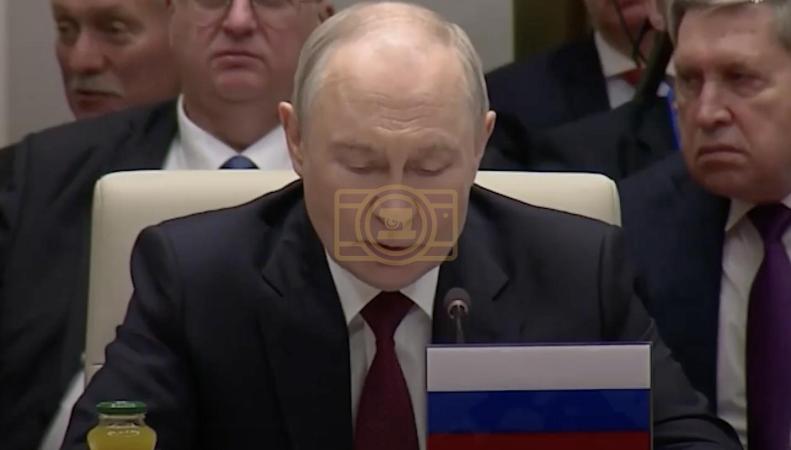
Speaking at the 2026 SCO Summit in Bishkek, Kyrgyzstan, Russian President Vladimir Putin called on member states, including China, India, Pakistan, Iran, and several Central Asian nations, to establish a development bank that operates completely outside the reach of Western financial systems. Putin argued that mechanisms like the dollar, SWIFT, Western commercial banks, and the International Monetary Fund have increasingly become tools of geopolitical pressure rather than neutral financial infrastructure. He framed the proposed bank as a way to shield SCO members, many of whom face sanctions or the threat of them, from having their economic ties disrupted by outside political decisions. The idea builds directly on financial cooperation frameworks the bloc already has in place, including its existing Business Council and Interbank Consortium.
To back up the proposal, Putin pointed to hard numbers showing just how far the bloc's members have already moved away from dollar dependence in their own dealings with Russia. He noted that trade between Russia and other SCO countries topped 400 billion dollars last year, a figure he presented as clear evidence of deepening economic ties within the group. Even more striking, Putin said that more than 98 percent of Russia's transactions with SCO members are now settled in national currencies rather than the dollar, a dramatic shift from how global trade has traditionally been conducted. That statistic underscores a broader trend Russia has pushed aggressively since facing sweeping Western sanctions following its invasion of Ukraine, gradually replacing dollar-based settlement with rubles, yuan, rupees, and other national currencies among trading partners.
The proposed bank isn't happening in a vacuum, either. Russia's finance minister has previously floated the idea that such an institution could eventually compete directly with SWIFT, describing the need for an independent payment infrastructure that wouldn't leave partners like Iran locked out of international finance the way Western sanctions currently do. The vision includes creating an independent depository system as well, one that would let investors across SCO member states buy and sell securities more freely across borders without routing through Western-controlled channels. This effort mirrors similar de-dollarization pushes Russia has made within BRICS, where Putin has previously proposed comparable investment platforms and accused the United States of "weaponizing" the dollar against countries it disagrees with politically.
Whether the SCO Development Bank moves from proposal to reality remains an open question, since similar ideas have circulated within the organization since as far back as 2010 without full implementation. Still, the timing of Putin's remarks, delivered alongside a broader address touching on regional stability and historical warnings tied to the anniversary of World War II's outbreak, signals that Moscow views this financial push as increasingly urgent rather than aspirational. With Iran and Russia both under heavy sanctions and other SCO members watching Western financial leverage warily, the appetite for an alternative system appears to be growing. Even so, building an institution capable of genuinely rivaling SWIFT and the dollar-based system would require years of coordination among countries with very different economic priorities, meaning any real transformation is likely to unfold gradually rather than overnight.