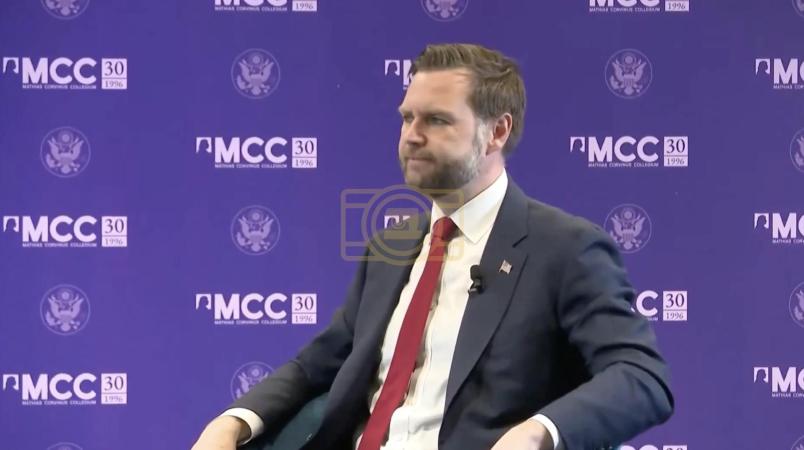
VP JD Vance Accuses EU of Undermining Hungarian Sovereignty.

Gallery
Videos
U.S. Vice President JD Vance delivered a forceful message on national sovereignty during a speech in Budapest, arguing that foreign influence through economic pressure constitutes a direct threat to democratic systems. Speaking at Mathias Corvinus Collegium, Vance defined such influence as efforts by external governments to threaten or coerce voters into aligning with outside interests. He emphasized that using financial leverage or political pressure to shape electoral outcomes undermines the core principle of self-determination. His remarks framed the issue as a fundamental challenge facing modern democracies.
Vance specifically criticized actions by the European Union, pointing to the withholding of billions of euros from Hungary over disputes related to border and migration policies. According to Vance, these measures represent an attempt to influence domestic political decisions through economic means. He argued that such tactics blur the line between legitimate policy disagreements and coercive interference. The comments reflect broader tensions between Hungary and EU institutions over governance and national policy direction.
In addition, Vance addressed concerns involving Ukraine, citing pipeline shutdowns that have affected energy supplies and economic conditions within Hungary. He suggested that these actions contribute to the broader pattern of external pressure being exerted on the country. By linking energy policy to political influence, Vance underscored the interconnected nature of economic and geopolitical strategies. His remarks highlighted the growing complexity of sovereignty issues in an increasingly interdependent world.
The speech comes during Vance’s visit to Hungary ahead of the country’s upcoming elections, where he has expressed support for Prime Minister Viktor Orbán. The timing of the visit and the tone of his remarks signal a clear alignment with Hungary’s current leadership on issues of national sovereignty and external influence. Vance’s presence has drawn attention to the broader political stakes surrounding the election. It also reflects the Trump administration’s approach to engaging with allied governments facing similar pressures.
As debates over sovereignty and foreign influence continue to intensify across Europe, Vance’s speech positions the United States as a vocal advocate for national self-determination. His comments resonate with a wider political narrative emphasizing resistance to external control and prioritizing domestic decision-making. The response from European leaders and institutions will likely shape the next phase of this debate. Meanwhile, Hungary’s elections are expected to serve as a key test case for these competing visions of governance and influence.