STILL ARMED, STILL WATCHING: Hamas Reasserts Grip on War-Torn Gaza

Gallery
Videos
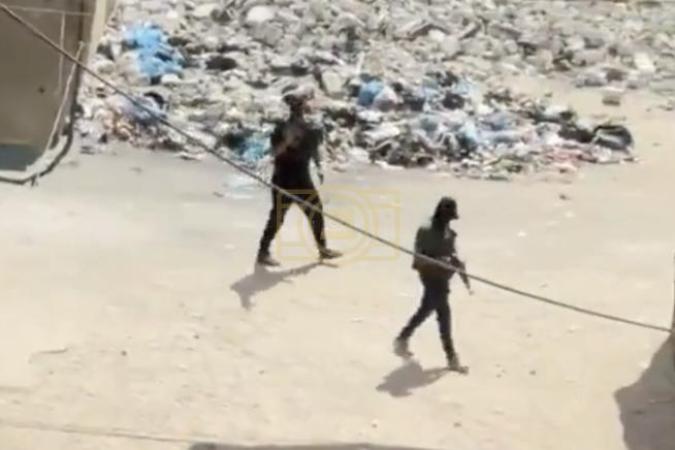
Nearly a year after a U.S.-brokered ceasefire quieted the guns of war in Gaza, footage circulating from the territory shows armed Hamas operatives walking through rubble-strewn streets, some raising rifles and firing into the air as civilians look on. The scenes, consistent with patterns documented repeatedly since the ceasefire took effect in October 2025, reflect Hamas's ongoing effort to project strength and reassert control over a territory devastated by two years of war. Analysts who track the group closely describe this kind of street presence not as random activity but as a deliberate signal, one meant to demonstrate to Gaza's population, rival factions, and outside observers alike that Hamas remains the dominant force in the areas it still controls.
That message has, at times, been backed by lethal force rather than mere display. In the days immediately following the ceasefire, Hamas's internal security apparatus moved quickly to reassert authority, reportedly redeploying thousands of operatives across the Strip and cracking down hard on suspected collaborators and rival clan members. Video verified by multiple news organizations showed masked gunmen, some wearing the green headbands associated with Hamas's military wing, executing men accused of collaboration with Israel in Gaza City streets, drawing sharp condemnation from the Trump administration, which warned it would intervene militarily if the killings continued. Israeli defense officials have separately noted that on their side of an internal demarcation line known as the Yellow Line, Hamas maintains what one analyst described as "a monopoly on force," despite having lost significant military capacity over the course of the war.
The persistence of these displays underscores one of the most contentious unresolved elements of the ceasefire agreement itself: disarmament. Under the terms of the U.S.-backed peace plan, Hamas is expected to demilitarize as Israeli forces gradually withdraw from the territory, but the group has consistently pushed back against fully surrendering its weapons, insisting instead that only its police forces would remain armed going forward. That resistance has stalled progress on subsequent phases of the broader reconstruction and governance plan, with Palestinian officials at one point accusing Israel of having implemented less than a third of its own initial obligations under the agreement, further complicating any path toward full Hamas disarmament.
Military analysts caution against reading Hamas's relative restraint toward Israel, the group has largely avoided major attacks since the ceasefire began, as evidence that it has been defeated or rendered irrelevant. Instead, the continued sight of armed operatives patrolling Gaza's streets, staging public gatherings, and asserting dominance over rival clans suggests an organization adapting to survive rather than one preparing to disappear. With Israel reportedly expanding its own territorial control within Gaza well beyond what the ceasefire initially permitted, and with disarmament negotiations still unresolved nearly a year on, these street patrols may be less a sign of strength than evidence of an uneasy standoff, one where neither side has fully achieved what the ceasefire was originally meant to secure.