ISRAELI NAVAL INNOVATION: Sealartec Unveils Cable-Free System Allowing Uncrewed Boats to Launch and Recover Other Vessels
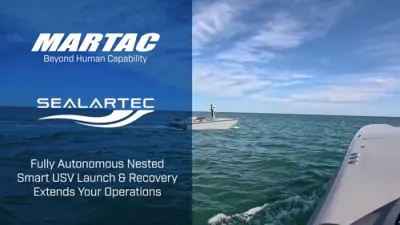
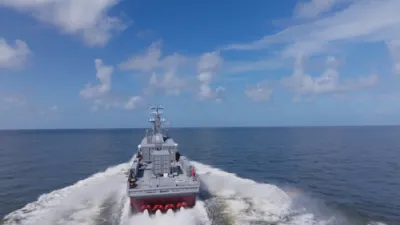
An Israeli-developed maritime technology is demonstrating how uncrewed vessels could deploy, retrieve and transport smaller boats without requiring human intervention on deck. Developed by Israeli company Sealartec in partnership with U.S.-based Maritime Tactical Systems (MARTAC), the Autonomous Launch and Recovery System (ALARS) allows a larger Devil Ray T38 unmanned surface vessel (USV) to autonomously capture, load and secure a smaller MANTAS vessel while both are operating at sea. A demonstration video shows the larger vessel positioning itself to recover the smaller craft, completing the capture and securing process without traditional cables or manual handling. The system uses Sealartec's proprietary Local Positioning System (LPS), which provides precise real-time positioning to coordinate the vessels during recovery. According to the companies, the technology can operate in sea conditions up to Sea State 4, expanding the circumstances in which autonomous maritime deployment and recovery can take place.
The technology addresses a major operational challenge facing unmanned naval fleets: how to deploy and recover smaller vessels safely without relying on personnel to perform dangerous recovery procedures at sea. By allowing larger USVs to function as autonomous motherships, ALARS could support coordinated maritime swarms, extend mission endurance and give naval operators greater flexibility in deploying multiple unmanned platforms across wider operational areas. The modular recovery cradle can also be adapted for other unmanned systems, potentially expanding its applications beyond the specific MANTAS vessels featured in the demonstration. MARTAC and Sealartec introduced the joint capability in February 2025, describing it as a step toward fleets capable of conducting complex missions with reduced dependence on personnel. The development highlights how Israeli engineering and American maritime technology are contributing to the evolution of autonomous naval operations, where vessels can deploy, recover and support one another while operating far from their human operators.