ANNUAL CRAB INVASION: Millions of Red Crabs Swarm Christmas Island as Annual Migration to the Coast Begins
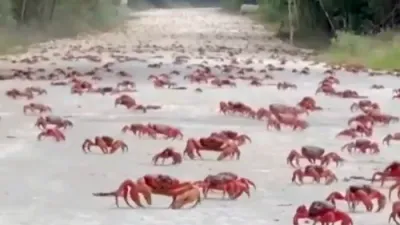
Tens of millions of red crabs have begun their spectacular annual migration across Australia's Christmas Island, creating a breathtaking natural phenomenon as the tiny creatures move in enormous numbers from the island's forests toward the coastline. The mass migration takes place when the major wet-season rains begin, triggering the crabs to leave their forest habitats and make their journey toward the sea. Roads, forest trails, and other parts of the island can become covered in bright red crabs as they move together toward their breeding grounds. The remarkable event transforms the island's landscape into a sea of red, attracting attention from wildlife enthusiasts, photographers, and nature lovers around the world. It is one of the most extraordinary seasonal wildlife spectacles, demonstrating the incredible scale of nature's reproductive cycles.
The migration is an essential part of the red crabs' annual breeding cycle, with the animals traveling to coastal areas to reproduce and release their eggs into the ocean. Timing is closely connected to rainfall and environmental conditions, which help determine when the crabs begin their journey and when spawning can take place. After reaching the coast, the crabs participate in a synchronized reproductive process that has made Christmas Island internationally famous for its unique wildlife. The journey also requires careful movement across roads and developed areas, prompting seasonal traffic management measures to protect the migrating animals. Each year, this extraordinary natural event offers a reminder of the importance of protecting the island's delicate ecosystems and the wildlife that depends on them.