PELICAN INVASION SURGE: 50,000 Great Whites Swarm Israel for Critical Desert Fuel Stop
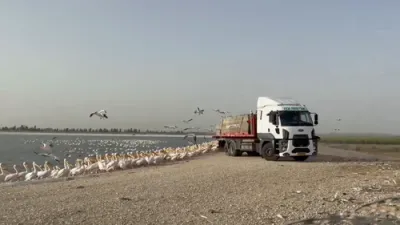
Every autumn between 40,000 and 50,000 Great White Pelicans pour through Israel on their long journey from Europe to Africa. The country serves as their final major feeding ground before the birds must cross the harsh Sinai Desert. Each pelican consumes roughly one kilogram of fish every day, creating an enormous demand that could easily overwhelm local commercial fish farms. Israeli authorities step in with a practical solution, hauling truckloads of fish to carefully chosen sites so the flocks can eat without disrupting the aquaculture industry. One of the key locations is the Viker Reservoir in central Israel, where the birds gather in huge numbers to feast and rest. The coordinated feeding allows the pelicans to regain the strength they need for the difficult flight ahead.
Once the birds have filled their stomachs they lift off again and continue south toward their African wintering grounds. The annual operation has become a routine part of managing the migration corridor that runs the length of the country. Without the delivered fish the pelicans would almost certainly turn to the commercial ponds that raise fish for market, causing significant economic losses. By providing an alternative food source, officials protect both the birds and the farmers who depend on those ponds. The sight of tens of thousands of large white birds swirling over the reservoirs has become a familiar autumn spectacle for nearby residents. The system keeps the migration flowing smoothly year after year while preventing conflict between wildlife and human industry.