CROSSING CHAOS: Train Smashes Stuck Truck in Dramatic Poland Crash
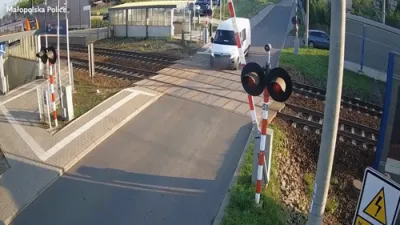
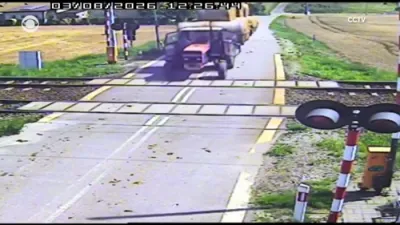
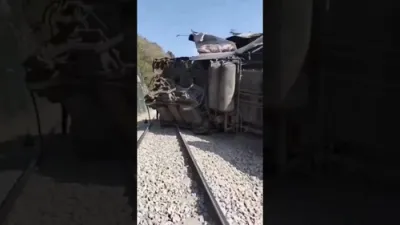
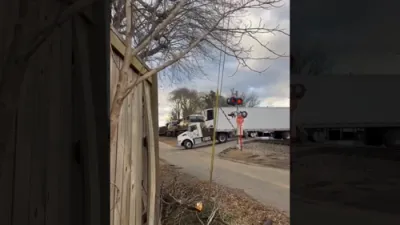
A passenger train collided with a truck trapped on a level crossing in Gdansk, Poland, on September 3, 2026, in an incident captured clearly on CCTV. The PKP Intercity service traveling from Gdynia to Zielona Góra struck the trailer of the vehicle after the barriers had already lowered. The 42-year-old Bosnian truck driver had driven onto the tracks as the gates began to close and then hesitated instead of breaking through them. Witnesses on the scene signaled urgently for him to push past the barriers and clear the crossing, but he first attempted to reverse. The high-speed impact destroyed the trailer while the truck’s cab remained largely intact.
No one was killed in the crash. The train driver was taken to hospital for treatment, and the truck driver along with a small number of passengers sustained only minor injuries. Approximately 250 to 300 passengers were on board the train and were able to evacuate safely after the collision. Emergency services, including fire crews and paramedics, responded quickly to the scene near Niegowska Street in the Gdansk Lipce area. The trailer was left in pieces, and debris was scattered across the tracks, yet the outcome was far less severe than the force of the impact suggested.
Polish rail authorities noted that the driver ignored clear advice from bystanders who recognized the approaching danger. Standard guidance in such situations is to drive through the barriers rather than remain trapped between them when a train is imminent. The driver’s delayed decision left the trailer fully exposed when the Intercity train arrived. Investigators have opened a formal inquiry, and the driver faces charges related to creating a direct danger of a traffic catastrophe. Rail operator statements emphasized that the barriers and signals were functioning as designed at the time of the incident.
The crash caused significant disruption to rail services on a key corridor linking northern Poland with other parts of the country. Traffic was halted on the affected section for several hours, with trains diverted onto alternative routes. Hundreds of services experienced delays totaling many thousands of minutes before full operations resumed later that evening. Repair work was required on the damaged track, adding to the temporary impact on regional and long-distance travel. Passengers from the struck train were transported onward by bus after being checked by medical teams.
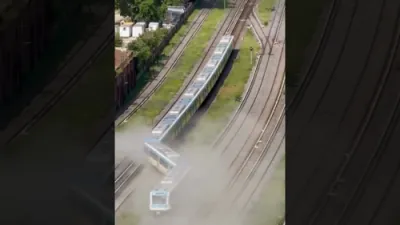
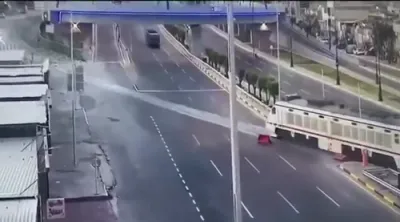
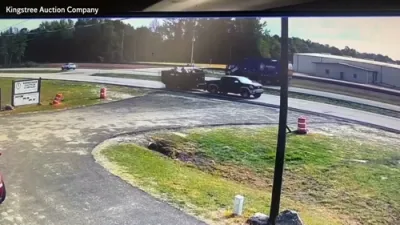
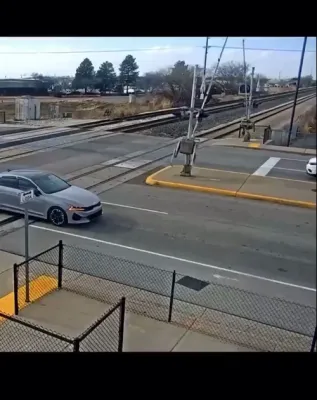
The dramatic video footage of the collision has circulated widely, showing the sequence from the moment the truck became trapped to the forceful strike on the trailer. Clouds of dust and debris rose as the train continued forward after contact. Officials have used the incident to remind drivers of the critical rule that vehicles caught between lowered barriers must break through immediately rather than attempt complex maneuvers. The absence of fatalities has been widely noted as fortunate given the speed and mass involved in the impact.
Authorities continue to examine the exact timing of the driver’s actions and the sequence of signals at the crossing. The event highlights ongoing challenges at level crossings where heavy vehicles can become immobilized between barriers. While the physical damage was extensive to the truck’s trailer, the relatively limited human cost has allowed investigators to focus on prevention and accountability. Rail traffic has returned to normal, but the images of the crash remain a stark illustration of how quickly a momentary hesitation can turn into a major incident.