FEDERAL COURT HALTS IOWA EXPLOSIVES DETONATION: Army Warns Unstable Lead Azide Could Explode Without Warning
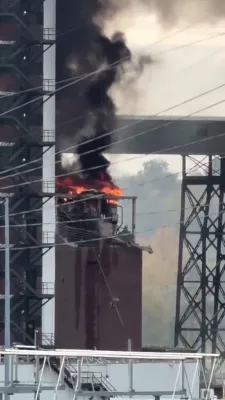
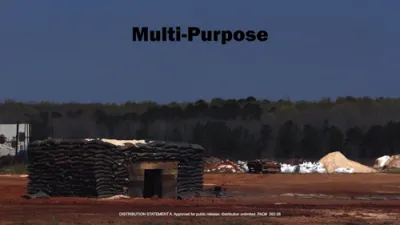
A federal appeals court has temporarily blocked the U.S. Army from carrying out its planned detonation of approximately 9,500 pounds of dangerously unstable lead azide stored in 68 drums at the Iowa Army Ammunition Plant in Middletown. The Eighth Circuit Court of Appeals issued an emergency stay suspending the Environmental Protection Agency's permit after the Iowa Environmental Council and the Iowa chapter of the Sierra Club challenged the operation. The Army discovered that the explosive material had deteriorated and recrystallized, making it increasingly sensitive to friction, shock and temperature changes. Military officials warn that even attempting to move or chemically treat the drums could trigger an accidental explosion, potentially putting workers and nearby communities in danger. The Army had planned to destroy the material through controlled detonations inside the earth-covered concrete bunkers where it is currently stored, using protective measures including sand-filled barriers, soaked soil and water misters to reduce the spread of toxic lead particles. Acting Army Secretary Adam Telle had warned that colder temperatures expected in the coming days could make the explosives even more unstable, making the planned operation increasingly urgent.
The legal challenge has now created a major dispute between federal authorities and environmental organizations over how the dangerous material should be handled. The groups argue that the EPA's emergency permit was issued without sufficient public notification and that potential environmental and health consequences, including lead contamination, were not adequately addressed. The Army and EPA maintain that controlled detonation presents the lowest immediate risk because disturbing the deteriorating explosives could cause a catastrophic accidental blast. In a further development, the Justice Department and Army have argued that federal emergency authority may allow the military to proceed even without relying on the suspended EPA permit, citing the danger of delaying the operation. In a court filing, the Army said it intends to carry out the detonation by November 24 at the latest, despite the court's order, while the environmental groups have challenged that position. The dispute remains unresolved, leaving nearby communities facing uncertainty over both the risk of an accidental explosion and the potential consequences of a planned controlled blast.