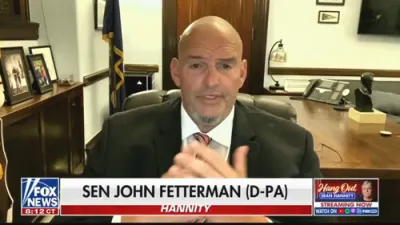
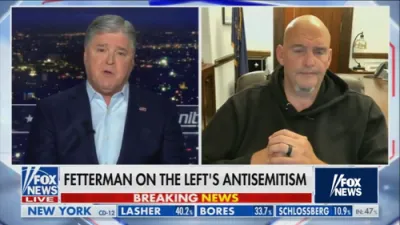
SHOCKING POLLS: New Poll Shows Fetterman More Popular With GOP Than His Own Party.
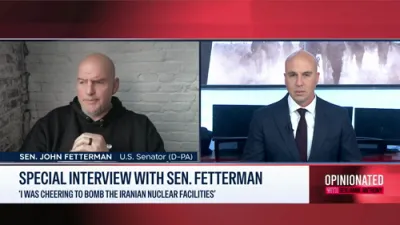
A new Siena University poll conducted August 17-21 for The New York Times and the Philadelphia Inquirer reveals a dramatic shift in how Pennsylvanians view Senator John Fetterman. Among Democrats, Fetterman’s favorability has sunk to a net -42, a sharp decline from levels recorded in May 2024. At the same time, Republicans rate him a net +52 favorable. Statewide, the senator holds a 49 percent favorable to 43 percent unfavorable rating, leaving him slightly above water overall.
The survey shows Fetterman actually outperforming Republican Senator Dave McCormick among GOP voters. This crossover appeal stands in stark contrast to the deep dissatisfaction now evident inside his own party. Pennsylvania Democrats interviewed for the poll expressed frustration over Fetterman’s perceived support for President Trump and his positions on Israel. They also pointed to his votes that broke with Democratic leadership on issues involving Iran and certain Trump administration nominees.
The intensity of the Democratic disapproval has fueled speculation that Fetterman could face a primary challenge. His net -42 rating among the party base is the kind of number that historically invites serious opposition from progressive or more party-loyal contenders. While the senator maintains respectable overall numbers, the collapse in support from Democrats creates a clear political vulnerability heading into future election cycles.
In the same poll, Governor Josh Shapiro continues to enjoy strong backing. Shapiro leads his prospective 2026 reelection matchup by a 55 percent to 39 percent margin. The contrast between Shapiro’s solid standing and Fetterman’s polarized numbers highlights different trajectories for the two most prominent Pennsylvania Democrats. Shapiro’s broad appeal appears intact even as Fetterman’s relationship with the party base has deteriorated.
The findings capture a rare political realignment in real time. A Democratic senator now draws higher favorability from Republicans than from members of his own party, a reversal that few observers anticipated when Fetterman first won his seat. The specific issues driving Democratic anger—Israel policy, interactions with the Trump administration, and key floor votes—have compounded over recent months and are now reflected in hard numbers.
For Fetterman, the poll presents both an unusual strength and a serious warning. His ability to win over Republican voters expands his potential coalition, yet the steep drop among Democrats threatens the foundation of his political support. How he responds to the growing discontent inside his party will likely shape the next chapter of his Senate career and determine whether a primary challenge materializes.