Rep. Randy Fine Tells Jewish Republicans: Today There Is a Third Kind of Jew — 'Those Who Fight'
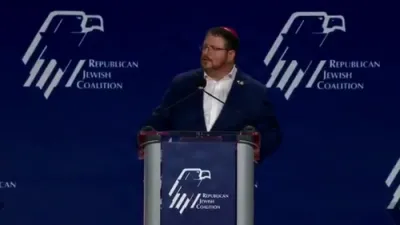
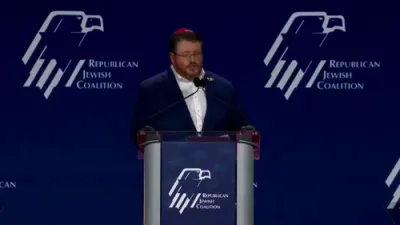
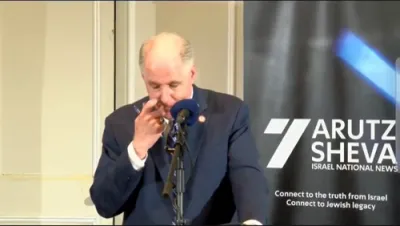
Rep. Randy Fine delivered a forceful message about Jewish self-defense and antisemitism at the Republican Jewish Coalition’s National Leadership Summit in Las Vegas on Sunday, telling the gathering that Jews today must be prepared to stand up and fight against those who threaten them.
Fine, the Jewish Republican congressman representing Florida’s 6th Congressional District, drew a standing ovation during his address at the Venetian Resort, where Republican lawmakers, candidates and Jewish activists gathered for the RJC’s annual summit.
Invoking the experience of European Jewry before the Holocaust, Fine told the audience that during the 1930s there were “only two kinds of Jews” — those who escaped and those who were killed.
Today, he said, Jews in both the United States and Israel have another choice: to fight back.
“There is a third kind: those who fight,” Fine declared, adding that he was proud to count himself among them.
The line echoed remarks Fine delivered during a Zionist Organization of America mission to Washington earlier this year. On that occasion, Fine similarly contrasted the fate of German Jews in the 1930s with what he said was the need for Jews today to be willing to confront antisemitism.
Fine’s speech came amid broader concern over antisemitism within American politics and divisions among Republicans over figures accused of tolerating or promoting antisemitic rhetoric. Those tensions have been a significant backdrop to this year’s RJC gathering, particularly ahead of Vice President JD Vance’s scheduled appearance.
Fine also used his address to attack political figures with whom he strongly disagrees, including Tucker Carlson and Republican lawmakers Marjorie Taylor Greene and Thomas Massie. Separately, he made sweeping and controversial remarks about Islam and Muslim politicians, comments that drew substantial coverage following the speech.
The congressman has repeatedly made combating antisemitism a central part of his political message. His remarks Sunday framed the issue in stark historical terms: rather than accepting persecution or relying solely on others for protection, he argued that Jews must actively confront threats against their communities.