מדינת ישראל אטאקירט חיזבאללה ראקעטן זייטלעך אין בעקאא טאל.
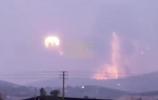
The Israeli Air Force conducted a series of airstrikes on February 26 targeting what the Israel Defense Forces described as Hezbollah military infrastructure in the Bekaa Valley near Baalbek in eastern Lebanon. According to Israeli officials, the operation focused on eight compounds used for storing rockets and training fighters, with the stated objective of degrading capabilities viewed as an ongoing threat to Israeli territory.
Video footage from the area showed sequential nighttime explosions, large fireballs, and secondary detonations consistent with munitions stored at the targeted sites. Israeli sources characterized the strikes as preemptive and part of an enforcement posture following repeated tensions along the northern front after the November 2024 ceasefire that ended a year of cross-border fighting.
Lebanese local reports indicated that at least one person was killed and 29 others were injured in areas including Shmistar, Boudai, and Hermel. Emergency responders were seen moving through affected rural zones as smoke rose from damaged structures. Lebanese officials and Hezbollah-aligned outlets accused Israel of violating the ceasefire and striking near civilian locations, while Israel maintained that the targets were exclusively military and embedded within Hezbollah’s operational network.
Hezbollah has not immediately announced a retaliatory response, contributing to a fragile but tense status quo. Analysts note that the absence of an instant counterstrike may reflect broader regional calculations, particularly amid heightened U.S.–Iran tensions and ongoing diplomatic efforts to prevent escalation across multiple fronts.
The Bekaa Valley has long served as a logistical and training hub for Hezbollah, making it a recurring focus of Israeli air operations aimed at preventing the transfer and deployment of advanced weaponry. Israel’s strategy has centered on disrupting rocket stockpiles and infrastructure that could be used in a future large-scale conflict, while attempting to avoid triggering a wider war.
The latest strikes underscore the volatility of the post-ceasefire environment, where both sides accuse each other of violations while operating below the threshold of full-scale confrontation. For Israel, the operation signals continued willingness to act unilaterally against perceived threats; for Lebanon, it highlights the ongoing risk that localized incidents could expand into broader hostilities.
As regional dynamics remain fluid, the immediate aftermath will be closely monitored for signs of retaliation, diplomatic engagement, or further military action. The balance between deterrence and escalation continues to define the security landscape along Israel’s northern border.
גאלערי
ווידעאס
