טראמפ באזוכט דזשארדזשע
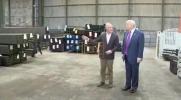
President Donald Trump visited the Coosa Steel manufacturing facility in Rome, Georgia, this week, using the tour to spotlight what he described as a resurgence in American heavy industry and the broader economic impact of his administration’s investment-driven policies. Walking the production floor alongside company officials and plant workers, Trump observed the steelmaking process, including the pouring of molten metal and the operation of high-temperature furnaces, emphasizing the role of domestic manufacturing in national strength.
The visit formed part of a wider economic message aimed at reinforcing support in a key battleground state. Trump pointed to what he characterized as an $18 trillion surge in global investment commitments to the United States, arguing that trade policy, energy expansion, and regulatory changes have encouraged capital to return to American industrial sectors such as steel, aluminum, and advanced manufacturing. He framed the revival of these industries as essential not only for job creation but also for supply chain security and defense readiness.
During the tour, the president interacted directly with plant employees, highlighting skilled labor and technical training as pillars of industrial competitiveness. Administration officials have increasingly emphasized workforce development programs tied to manufacturing growth, positioning them as pathways to middle-class employment without reliance on overseas production. Trump used the setting to reiterate his preference for domestic sourcing in federal procurement and infrastructure projects, policies he says have strengthened demand for American-made steel.
The Rome visit also carried political significance. Georgia remains a focal point in national electoral strategy, and the appearance alongside local industry leaders and supportive elected officials underscored the administration’s effort to connect economic messaging with regional manufacturing communities. Trump praised allies in the state’s congressional delegation and linked industrial expansion to broader economic confidence, dismissing ongoing concerns about inflation as inconsistent with what he described as strong wage growth and investment inflows.
From a policy perspective, the emphasis on steel production reflects a continued focus on tariffs, trade enforcement, and energy costs as key variables affecting domestic output. Supporters argue that protective measures and expanded energy supply have lowered input costs and shielded U.S. producers from foreign dumping. Critics maintain that tariffs can increase downstream costs for manufacturers and consumers, illustrating the ongoing debate over the optimal balance between protection and market competition.
The Coosa Steel tour served as a visual demonstration of the administration’s industrial narrative, pairing imagery of active production lines with a broader argument that American manufacturing is entering a new growth phase. By highlighting capital investment, workforce engagement, and supply chain resilience, the visit reinforced the central role of heavy industry in the administration’s economic messaging and its political strategy in manufacturing-focused regions.
גאלערי
ווידעאס
