טראמפ מאכט וויצן וועגן אפזאגן רוביא נאך זיין מעכטיגע מינכן רעדע.
גאלערי
ווידעאס
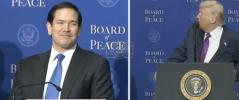
President Donald Trump brought levity to Washington this week as he publicly praised Secretary of State Marco Rubio’s widely noted address at the Munich Security Conference, joking that the Florida diplomat performed so effectively he might be “terminated” for outshining expectations. The remark, delivered during the administration’s first board-style meeting of the term and broadcast on Fox News, drew laughter from Rubio and attendees, underscoring the collegial dynamic within the president’s national security team.
Trump described Rubio’s delivery as “a velvet glove, but a kill,” a characterization that framed the speech as both diplomatically polished and strategically firm. Rubio’s Munich remarks called on European allies to recommit to core Western values and strengthen collective resolve against authoritarian adversaries, radical Islamist movements, and ideological trends the administration views as weakening transatlantic cohesion. The address was received favorably among conservative policy circles for combining traditional alliance language with a sharper ideological contrast reminiscent of Cold War–era messaging.
The president’s humorous warning—“Don’t do any better than you did, please. If you do, you’re out of here”—was clearly delivered in jest, but it served a dual communications purpose. Domestically, it highlighted a narrative of internal unity and confidence in the administration’s foreign policy bench. Internationally, it reinforced the perception of a coordinated U.S. approach in which senior officials articulate consistent themes through different rhetorical styles. Trump emphasized that while Rubio’s tone was measured, his own messaging carries the same substance in a more direct form, suggesting complementary roles rather than competition.
Rubio’s Munich speech itself focused heavily on NATO burden-sharing, energy security, and the defense of democratic institutions against external coercion. By invoking historical parallels and urging Europe to move beyond what he described as complacency, Rubio positioned the United States as both a steadfast ally and a demanding partner. Supporters compared the clarity of the message to President Ronald Reagan’s Berlin Wall challenge, arguing that it signaled renewed ideological confidence within Western diplomacy.
The exchange between Trump and Rubio also reflected the administration’s broader effort to project cohesion after the transition into a second term. Public displays of rapport between the president and his cabinet have been used to counter narratives of internal division that often accompany high-profile foreign policy debates. In this instance, the combination of praise, humor, and policy alignment conveyed a leadership team comfortable operating in both formal diplomatic arenas and informal domestic settings.
From a strategic communications standpoint, the moment demonstrated how personality-driven messaging can amplify policy themes. Rubio’s structured, alliance-focused speech provided the substantive framework, while Trump’s unscripted commentary translated the same themes into a more populist register for a domestic audience. The result was a layered message reinforcing U.S. commitment to allies, skepticism toward adversaries, and confidence in the administration’s diplomatic posture.
As NATO faces renewed pressure from geopolitical competition and internal political strains, the administration appears intent on pairing traditional diplomatic outreach with a more assertive rhetorical style. The Munich conference, and the subsequent exchange in Washington, offered a snapshot of that approach: a blend of formal alliance reassurance, ideological clarity, and personal rapport at the highest levels of U.S. leadership.
