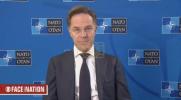
נאטא טשיף מארק רוטה לויבט אויס פרעזידענט טראמפ
גאלערי
ווידעאס
That praise stands in obvious tension with the public position of several European governments, which have stressed that the conflict is not a NATO war. Reuters reported on March 18 that key European leaders, including those in Germany, France, and Spain, rejected joining Trump’s Iran campaign and insisted Europe had not signed up for Washington’s military objectives. France went even further, with President Emmanuel Macron saying on March 17 that Paris would never take part in operations to unblock the Strait of Hormuz while hostilities were still underway.
The awkwardness is compounded by Trump’s own rhetoric toward the alliance. Reuters reported that European governments have resisted military participation while Trump has blasted allies for reaping the benefits of U.S. power without sharing the burden, and other contemporaneous reporting described him publicly deriding NATO members over their reluctance to help reopen the strait. That leaves Rutte in the unusual position of enthusiastically crediting Trump’s leadership even as the president continues to browbeat the very alliance Rutte is supposed to hold together.
The result is a communications spectacle that underscores the wider strategic confusion now surrounding the Iran crisis. Rutte appears determined to preserve transatlantic cohesion by flattering Trump and emphasizing coalition momentum, but many European capitals are signaling caution, legal concern, and political distance from the war itself. The more he frames the mission as “Trump’s vision,” the more he risks confirming the critique that NATO’s messaging is being bent around Washington’s domestic politics rather than a genuinely unified allied strategy.
