טראמפ'ס פולע רעדע אין שווייץ
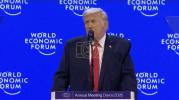
President Trump delivered a sweeping 90-minute address and extended question-and-answer session at the World Economic Forum in Davos, using the global stage to declare what he described as a historic revival of the United States economy and a decisive rejection of globalist economic orthodoxy.
Speaking to an audience long associated with open borders, climate mandates, and supranational governance, Trump highlighted economic figures he said proved the success of his America First agenda. He pointed to fourth-quarter GDP growth of 5.4 percent, core inflation at 1.6 percent, and more than $18 trillion in new private-sector investment since his 2025 inauguration. According to Trump, these outcomes were achieved through aggressive tariffs, sweeping deregulation, and a dramatic expansion of domestic energy production.
Trump framed the turnaround as a direct reversal of policies he said weakened the West over the past decade. He criticized mass migration, unchecked government spending, and green energy mandates, arguing they hollowed out industrial capacity and made Europe dependent on hostile energy suppliers. Citing Germany as an example, Trump referenced a reported 22 percent drop in electricity output since 2017 as evidence that climate-driven policy had destabilized Europe’s economy and energy security.
While addressing concerns from European leaders and multinational executives, Trump made clear that the United States would no longer subordinate its interests to global institutions or consensus-driven economic models. He argued that economic nationalism, not globalism, was responsible for restoring growth, stabilizing prices, and attracting capital back to American soil.
The president also outlined his vision for U.S. leadership in emerging strategic sectors, emphasizing artificial intelligence, nuclear energy, and advanced manufacturing as pillars of long-term dominance. He warned that nations unwilling to secure reliable energy or protect domestic production would fall behind rapidly in the coming decade.
Trump’s appearance in Davos underscored the widening ideological divide between the United States under his leadership and much of the European political establishment. Rather than moderating his message for the audience, Trump used the forum to challenge its core assumptions, presenting America’s economic performance as proof that the globalist model had failed—and that the future belonged to sovereign nations willing to prioritize growth, security, and national interest.
גאלערי
ווידעאס
