ערד ציטערניש פארשלינגט 30,000 קוואדראט מעטער לאנד אין אינדאנעזיע.
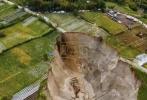
A rapidly expanding ground collapse in Ketol District, Central Aceh, Indonesia, has swallowed more than 30,000 square meters of land, raising urgent concerns for nearby communities, infrastructure, and agricultural areas. Drone footage from Pondok Balik Village shows a massive sinkhole that has continued to widen since February 14, 2026, consuming farmland and encroaching toward homes, roads, and power lines. Local authorities are monitoring the situation closely as the instability threatens both livelihoods and essential services.
Geological assessments indicate that the collapse is likely linked to prolonged seasonal rainfall interacting with the region’s karst terrain, a landscape characterized by soluble limestone that is highly vulnerable to erosion and underground cavity formation. When heavy rains infiltrate these formations, they can rapidly dissolve supporting rock layers, causing sudden surface failures. Aceh has experienced similar events in recent years, including a 2023 incident that displaced multiple communities, underscoring the recurring risk in the region.
The current sinkhole spans approximately three hectares and continues to expand, complicating efforts to secure the surrounding area. Roads connecting rural settlements are at risk of being severed, while nearby power infrastructure faces potential disruption. Farmers in the affected zone have already reported crop losses, and residents have begun relocating as a precautionary measure.
Emergency planners are assessing mitigation strategies, including restricting access to unstable zones, rerouting traffic, and reinforcing vulnerable utility lines. However, the unpredictable nature of karst collapses makes long-term containment challenging. The event highlights the need for enhanced geological monitoring, land-use planning, and early warning systems in regions prone to subsurface erosion.
As the sinkhole continues to grow, the priority remains safeguarding residents and preventing further damage to critical infrastructure. The situation in Central Aceh serves as a stark reminder of the hazards posed by extreme weather interacting with fragile geological formations, particularly in rural areas where communities rely heavily on land and local transport networks for their economic survival.
גאלערי
ווידעאס
