פולע רעדע פון נתניהו
גאלערי
ווידעאס
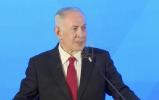
Prime Minister Benjamin Netanyahu delivered an extensive national address outlining Israel’s strategic posture on Iran, Gaza, defense self-reliance, and the country’s economic trajectory during a prolonged period of conflict. The remarks combined security doctrine with economic messaging, presenting a framework that ties military objectives to long-term national resilience.
On Iran, Netanyahu set out stringent conditions for any future nuclear agreement, insisting that a credible deal must require the complete removal of enriched uranium, the dismantling of enrichment infrastructure, and meaningful restrictions on ballistic missile development. He argued that previous diplomatic frameworks failed because they allowed Iran to retain core capabilities and relied on verification mechanisms that, in Israel’s assessment, proved insufficient. The prime minister emphasized that Israeli policy will be guided by independent threat assessments rather than external assurances, reflecting a doctrine that prioritizes preemptive risk mitigation.
Addressing Gaza, Netanyahu described ongoing operations aimed at dismantling Hamas’ military and governing capacity. He framed demilitarization, the destruction of tunnel networks, and the disarmament of militant groups as essential prerequisites for any sustainable post-conflict arrangement. According to the government’s position, long-term security for Israeli civilians requires not only the degradation of current capabilities but the prevention of future rearmament cycles. The approach is presented as aligned with broader international efforts to establish a governance structure in Gaza that excludes armed factions.
A significant portion of the speech focused on Israel’s defense industrial strategy. Netanyahu highlighted accelerated efforts to expand domestic arms production, reduce dependency on external suppliers, and develop indigenous capabilities across key sectors. This includes investment in advanced munitions manufacturing, unmanned systems, and cyber defense technologies. The objective is to ensure operational continuity during extended conflicts while strengthening strategic autonomy.
Economically, the prime minister pointed to indicators that he said demonstrate resilience despite two years of war. He cited record performance on the Tel Aviv Stock Exchange, a strengthening shekel, and increased capital inflows into high-technology sectors, particularly artificial intelligence and cybersecurity. These trends were presented as evidence that Israel’s innovation-driven economy continues to attract global investment even under sustained security pressures. The linkage between technological growth and defense capacity was emphasized, with dual-use innovation supporting both commercial expansion and military modernization.
Netanyahu also addressed the international environment, warning of rising antisemitism and calling for a coordinated response that combines diplomatic engagement, public advocacy, and national unity. He framed Israel’s domestic strength—economic, technological, and military—as a central component of its global standing and its ability to confront both conventional and asymmetric threats.
The speech presented a comprehensive strategic narrative: uncompromising security requirements on Iran, the systematic dismantling of militant infrastructure in Gaza, the pursuit of defense self-sufficiency, and the projection of economic durability. The government’s message is that Israel intends to emerge from the current period of conflict with enhanced military independence, sustained technological leadership, and a security architecture designed to prevent the reconstitution of hostile forces on its borders.
