אמעריקאנע מיליטער ציען זיך ארויס פון סיריע
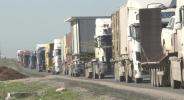
United States forces have begun withdrawing from the Qasrak base in Syria’s Hasakeh province, according to regional sources and imagery showing a large military convoy moving toward the Iraqi border. The convoy, consisting of dozens of trucks carrying armored vehicles, equipment, and prefabricated structures, marks a significant logistical movement from one of the key American installations in northeastern Syria.
The Qasrak facility has served as a strategic hub within territory controlled by Kurdish-led forces, supporting counterterrorism operations against remnants of ISIS and providing a staging point for coordination with local partners. Its location along critical supply routes made it an important node for maintaining operational reach across the region.
A Kurdish official confirmed that the withdrawal is underway, though U.S. defense authorities have not publicly detailed the scope, timeline, or whether the move represents a full departure or a repositioning of assets. Such withdrawals typically involve phased redeployment of personnel, sensitive equipment removal, and infrastructure dismantling to prevent adversarial use.
The convoy’s movement toward Iraq suggests a consolidation of forces rather than a complete regional exit, a pattern seen in previous adjustments to the U.S. footprint in Syria. Maintaining access to cross-border logistics corridors allows American forces to preserve rapid re-entry capability while reducing fixed-site exposure.
Strategically, the shift comes amid ongoing debates over the U.S. military role in Syria, particularly balancing counterterrorism objectives against force protection and broader regional priorities. The presence of American troops has been tied to preventing an ISIS resurgence, supporting Kurdish partner forces, and countering Iranian influence. Any reduction in base infrastructure raises questions about how those missions will be sustained.
For Kurdish authorities, U.S. base withdrawals carry both security and political implications. American installations have functioned not only as operational centers but also as deterrents against hostile actors in the region. Changes to that posture may influence local security calculations and negotiations with other regional powers.
Operationally, redeployments of this scale require extensive planning, including route security, air cover, and coordination with partner forces to avoid creating temporary security gaps. The removal of prefabricated structures indicates an effort to dismantle rather than abandon infrastructure, consistent with standard military retrograde procedures.
While it remains unclear whether Qasrak’s drawdown signals a broader policy shift, the movement underscores the fluid nature of U.S. force posture in Syria. Future announcements regarding troop levels, base consolidation, and mission scope will determine whether this withdrawal represents a tactical adjustment or part of a longer-term strategic realignment in the region.
גאלערי
ווידעאס
