איבער א נייע סארט עלעקטראנישע בייק
גאלערי
ווידעאס
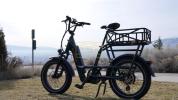
The question of whether an electric cargo bike can realistically replace a car is no longer theoretical, and the RadRunner Max from Rad Power Bikes provides a compelling case study. Designed as a utility-focused e-cargo platform, the bike combines extended range, integrated storage solutions, and commuter-oriented safety features in an effort to handle the kinds of daily tasks traditionally reserved for a small vehicle.
In real-world testing, the RadRunner Max was put through a typical morning commute that included urban traffic, stop-and-go intersections, and a sustained uphill climb. Travel time proved competitive over short city distances, particularly in dense traffic where the bike’s ability to use bike lanes and bypass congestion offset its lower top speed. While a car retained an advantage on open roads, the time difference narrowed significantly in urban corridors where parking, idling, and route constraints affected vehicle efficiency.
Cargo capability is central to the car-replacement argument, and the RadRunner Max addresses this with a modular rear rack system, passenger seating options, and compatibility with panniers and front baskets. Grocery runs, work equipment, and small parcel transport were all manageable within the platform’s payload limits. For single riders or small households, this capacity covers a substantial portion of routine errands without requiring fuel, insurance, or parking infrastructure.
Hill performance, often a limiting factor for traditional bicycles, was mitigated by the bike’s electric assist and torque output. The motor maintained steady power on inclines that would be prohibitive on a non-assisted bike, though speed dropped under heavier loads. Battery consumption increased during climbs, highlighting the importance of range planning for riders in hilly terrain.
Convenience factors favored the e-bike in several scenarios. Door-to-door travel eliminated parking searches, and the ability to store the bike in smaller spaces reduced logistical friction. Charging from a standard outlet simplified energy replenishment compared to fuel stops. However, weather exposure, limited passenger capacity compared to a car, and reduced suitability for long highway travel remain practical constraints.
Safety considerations included integrated lighting, reflective sidewalls, and stable handling under load. The lower center of gravity associated with cargo bikes contributed to predictable control, although riders must adapt to the increased length and weight when maneuvering at low speeds. Urban infrastructure quality, particularly the availability of protected bike lanes, significantly influenced overall safety and comfort.
From a cost perspective, the RadRunner Max offers a markedly lower total cost of ownership than a car when factoring in fuel, maintenance, insurance, and parking. For urban commuters with trips under typical e-bike range limits, the economic argument is strong. The environmental impact is also reduced, with lower operational emissions and energy consumption per mile.
The testing suggests that while the RadRunner Max cannot fully replace a car for every use case, it can substitute for a substantial share of daily urban travel and errands. For riders with access to bike-friendly routes and moderate cargo needs, the platform functions as a practical primary transport option rather than a secondary recreational device. In that role, the e-cargo bike represents a meaningful shift toward more flexible, efficient, and space-efficient urban mobility.
