טראמפ אויף פאקס ניוז ווארנט איראן צו נאכמער חרוב מאכן זייער מיליטער
גאלערי
ווידעאס
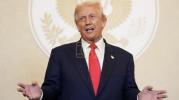
President Donald Trump stated in a Fox News phone interview with Maria Bartiromo that the United States has already significantly degraded Iran’s military capabilities, leaving key infrastructure such as water desalination plants and electric generating facilities as potential remaining high-impact targets. He described these systems as critical to Iran’s internal functioning, while emphasizing that any action against them would be “very devastating” and something he would “hate to do.” His remarks framed the discussion within the context of ongoing pressure on Tehran. The comments were presented as part of a broader assessment of strategic options.
Trump’s remarks come amid a wider narrative of sustained U.S. pressure aimed at preventing Iran from advancing its nuclear capabilities. He suggested that prior actions had already weakened Iran’s operational capacity, shifting focus toward infrastructure that supports civilian life and national services. The framing reflects a strategy that blends deterrence with signaling, aimed at influencing decision-making in Tehran. It also highlights the administration’s emphasis on maintaining leverage in ongoing geopolitical confrontations.
The reference to water desalination and electrical generation systems introduces significant sensitivity, as such infrastructure is typically intertwined with civilian access to essential services. Discussions involving these assets often raise concerns among analysts about potential humanitarian consequences and broader regional instability. While the statement was presented in a strategic context, it underscores the risks associated with escalation involving dual-use or civilian-dependent systems. The implications extend beyond military considerations into economic and social stability.
Reactions to the comments have been mixed, with some viewing them as a demonstration of deterrence intended to pressure Iranian leadership, while others emphasize the potential consequences for civilian populations. The remarks also coincided with broader debates over U.S. policy toward Iran, including support for opposition movements and long-term regional strategy. As tensions persist, such statements are likely to intensify scrutiny of both diplomatic and military options. The situation reflects an ongoing escalation in rhetoric surrounding critical infrastructure targeting.
Overall, the interview highlights the continued centrality of Iran in U.S. foreign policy discussions and the range of tools being considered in managing the confrontation. While framed as reluctant consideration, the mention of high-impact infrastructure underscores the severity of the strategic environment. Analysts note that such discourse can influence both diplomatic signaling and market perceptions in the region. The broader trajectory suggests continued volatility as competing pressures shape policy decisions.
