מעקסיקאנע מיליטער נעמט צוריק איבער קאנטראל
גאלערי
ווידעאס
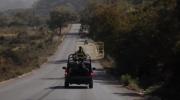
Mexican military forces swept across parts of Jalisco in a show of force following a wave of cartel violence triggered by the reported killing of Nemesio Oseguera, widely known as “El Mencho,” the longtime leader of the Jalisco New Generation Cartel. The aftermath was marked by burned vehicles, blocked roadways, and heavily guarded infrastructure as authorities moved to reestablish control in one of the country’s most strategically significant regions.
Convoys of army vehicles were deployed to key transit corridors, industrial zones, and public facilities to prevent further sabotage and to ensure the continuity of essential services. Security personnel established checkpoints, conducted patrols in urban and rural areas, and secured fuel depots, communication hubs, and transportation routes that had been targeted during the initial outbreak of violence. The rapid militarized response reflects the government’s effort to contain retaliatory actions and deter additional coordinated attacks by cartel cells.
The violence followed a pattern seen in previous high-profile cartel leadership disruptions, in which criminal organizations attempt to demonstrate continued operational capacity through arson, road blockades, and attacks on public infrastructure. Burning vehicles are often used both to obstruct security movements and to create a climate of fear among local populations. In this instance, multiple incidents were reported across municipalities, prompting a region-wide security posture.
Officials emphasized that the deployment was aimed at protecting civilians and stabilizing commerce in an area critical to manufacturing and logistics. Jalisco’s economic importance makes prolonged disruption particularly costly, and the presence of military units is intended to reassure businesses and residents while law enforcement conducts targeted operations against remaining cartel elements.
The reported death of El Mencho represents a potentially significant turning point in Mexico’s ongoing struggle against organized crime. As one of the most influential cartel figures in recent years, his leadership was associated with the expansion of highly organized, heavily armed operations and a willingness to confront state forces directly. The immediate retaliatory violence underscores the challenges that often follow the removal of a dominant criminal leader, including the risk of internal power struggles and short-term escalation.
Authorities have not yet detailed the full scope of arrests or seizures linked to the security operation, but officials indicated that intelligence-driven efforts are underway to dismantle command structures and financial networks tied to the organization. The objective is to prevent regrouping and to reduce the cartel’s ability to coordinate further acts of violence.
For residents, the visible military presence has brought a measure of stability after hours of uncertainty, though security forces remain on high alert. The situation illustrates both the impact of leadership decapitation strategies and the volatility that can follow in the immediate aftermath. In the near term, sustained patrols and infrastructure protection are expected to continue as the government works to consolidate control and prevent additional flare-ups.
