פרעזידענט טראמפ זאגט אז דאוואס טאריפס האבן פארקלענערט די אמעריקאנע האנדל דעפיציט.
גאלערי
ווידעאס
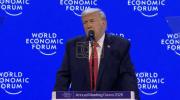
President Trump used his remarks at the World Economic Forum in Davos to highlight what he described as a decisive success of his tariff-based trade strategy, arguing that his policies have delivered results long dismissed as impossible by economic experts. Speaking to global business and political leaders, Trump said the United States achieved a dramatic reduction in its trade imbalance without triggering inflationary pressure.
“In one year, I slashed our monthly trade deficit by a staggering 77%, and all of this with no inflation—something everyone said could not be done,” Trump declared, framing the outcome as a direct rebuttal to critics of his America First trade agenda. He emphasized that tariffs, combined with domestic industrial revitalization, have strengthened U.S. leverage while restoring fairness to global trade relationships.
Official trade data supports a substantial contraction in the goods trade deficit over the course of 2025. U.S. Census Bureau figures show the monthly goods deficit declined from approximately $93.5 billion in January 2025 to about $29.4 billion by October, representing a reduction of roughly 69 percent. The shift was driven largely by a sharp reduction in imports, which fell by more than 40 percent during the period, reflecting the impact of tariffs and supply-chain reorientation.
The administration also points to gains in domestic production as evidence that tariffs have had positive structural effects. Trump highlighted increased steel output and renewed investment in U.S. manufacturing, arguing that tariffs have encouraged companies to produce at home rather than rely on foreign suppliers. Supporters say this has strengthened industrial capacity and reduced strategic dependence on overseas producers.
Exports, however, also declined during the same period, falling by roughly a quarter according to Bureau of Economic Analysis data. The White House contends this reflects a transitional adjustment as trade flows rebalance, rather than a fundamental weakness in U.S. competitiveness. Trump maintains that as domestic capacity expands and new trade terms take hold, exports will recover on more favorable footing.
By presenting these figures in Davos, Trump positioned his trade policy as a central pillar of his broader economic message: that economic sovereignty, enforced through tariffs and tough negotiations, can deliver measurable results without the runaway inflation predicted by critics. In doing so, he challenged the prevailing global consensus and reinforced his argument that America First trade policies have reshaped outcomes once considered politically and economically unattainable.
