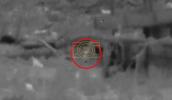

The IDF has confirmed the elimination of four senior Hamas operatives in southern Gaza, marking another significant blow to the terror group’s command structure as Israeli forces continue targeting its underground network. The operation centered on a tunnel system in Rafah, where the operatives attempted to escape before being struck in a precision airstrike captured through thermal surveillance.
Among those killed was Mohammad Bawab, commander of Hamas’ East Rafah Battalion, who played a direct role in planning the October 7 massacre against communities in southern Israel. His deputy, Ismail Abu Labda, was also identified as a key planner involved in organizing logistical and operational elements leading up to the attack. Their deaths remove two of the most entrenched field commanders still active in Hamas’ southern Gaza hierarchy.
Also killed were Tawfiq Salem, a company commander within the same battalion, and Abdullah Hamad, the son of a senior Hamas official who served as a security officer within their unit. Hamad’s presence in the tunnel underscores the extent to which Hamas embeds family networks into its military operations, further entangling its political leadership with its armed activities.
Thermal footage accompanying the IDF announcement shows several individuals emerging from a tunnel shaft before an airstrike engulfs the area—illustrating the precise, intelligence-driven tactics Israel continues to employ in its campaign to neutralize Hamas’ subterranean infrastructure. The use of thermal imaging reflects a broader shift in IDF doctrine as forces work to outmaneuver militants who rely heavily on tunnel warfare.
Israeli media outlets, including The Times of Israel, have corroborated the operatives’ identities and their involvement in the October 7 planning cell. This operation joins a growing list of successful strikes that have degraded Hamas’ operational leadership. Since the start of the war, the IDF has reported the dismantling of more than 20 Hamas battalions, leaving the organization increasingly fractured and dependent on fragmented pockets of remaining fighters.
The elimination of the Rafah cell represents both a tactical and symbolic victory. It underscores Israel’s commitment to pursuing those responsible for the October 7 atrocities while continuing to dismantle the command networks that allow Hamas to operate. As underground combat remains a defining feature of the conflict, this operation serves as a vivid example of Israel’s evolving capabilities and its strategic resolve to prevent Hamas from reconstituting itself.
גאלערי
ווידעאס