א הערליך אייזיגע לעיק
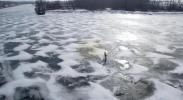
Drone footage has captured dramatic scenes over Lake Erie, showing vast expanses of white ice fractured by long, jagged cracks as winter conditions begin to shift. At the height of the recent Arctic cold blast, ice coverage on Lake Erie surged to nearly 80 percent, the highest level among the Great Lakes during that period. The imagery highlights both the scale of seasonal freezing and the dynamic processes that occur as temperatures fluctuate.
Lake Erie’s relatively shallow average depth of about 62 feet allows it to freeze more quickly and extensively than deeper lakes such as Lake Superior. This geographic characteristic has long made Erie the most ice-prone of the Great Lakes, with large portions regularly freezing during sustained cold spells. Scientific observations from Great Lakes environmental monitoring have consistently shown that while individual winters can produce significant ice cover, long-term trends indicate an overall decline in average ice extent across the basin over the past several decades.
The footage shows a striking contrast between solid ice fields and visible fissures forming as wind, currents, and temperature variations place stress on the frozen surface. These cracks are a normal part of the ice lifecycle, reflecting shifting pressures and gradual melting rather than sudden structural collapse. Under clear blue skies, the visual effect underscores the scale and power of natural winter processes across one of North America’s most economically and environmentally significant waterways.
Public reaction to the imagery has been wide-ranging, with many viewers expressing awe at the natural spectacle while others pointed to the lake’s unique geography as an explanation for the rapid freeze. The event serves as a reminder of how regional weather patterns can produce short-term extremes even as broader climatic trends continue to evolve.
As temperatures moderate, the ice cover is expected to fragment and recede, a seasonal transition that will reopen shipping lanes and restore open water conditions. The drone footage provides a detailed snapshot of this transitional moment, illustrating the interplay between cold air outbreaks, lake dynamics, and the physical characteristics that make Lake Erie distinct within the Great Lakes system.
גאלערי
ווידעאס
