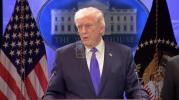
טראמפ זאגט אז 32,000 זענען אומגעקומען אין פראטעסטן קעגן איראן.
גאלערי
ווידעאס
President Donald Trump declared on February 20, 2026, that 32,000 people were killed during anti-government protests in Iran, sharply escalating international attention on Tehran’s handling of the unrest and renewing calls for accountability over what he described as a brutal suppression of dissent. The statement places the spotlight back on the Iranian regime’s response to demonstrations that erupted in January over worsening economic conditions, government corruption, and long-standing political repression.
The protests, which spread across multiple cities, represented one of the most significant domestic challenges to Iran’s leadership in recent years. Demonstrators voiced anger over inflation, unemployment, and the regime’s allocation of national resources toward regional proxy activities rather than domestic welfare. Security forces responded with force, deploying the Islamic Revolutionary Guard Corps, Basij militia units, and riot police to disperse crowds, impose curfews, and conduct mass arrests.
Casualty figures from the crackdown remain highly contested. Trump’s assertion of 32,000 deaths exceeds most publicly available independent estimates, but it aligns with a broader narrative advanced by critics of the Iranian government who argue that the true scale of the violence has been systematically concealed. The Human Rights Activists News Agency has verified thousands of deaths and suggested the real number could be significantly higher, while a United Nations special rapporteur indicated that the toll may exceed 20,000. Iranian authorities, by contrast, maintain that just over 3,000 people were killed, a figure widely disputed by international observers and human rights organizations.
The discrepancy in reported numbers reflects the opaque information environment inside Iran, where foreign media access is restricted and internet shutdowns have been used during periods of unrest. Such measures make independent verification difficult and contribute to the wide gap between official and external assessments. Analysts note that the regime has historically minimized casualty figures following episodes of domestic upheaval, while opposition groups and exile networks often report higher totals based on aggregated local accounts.
Trump’s remarks are consistent with his longstanding hardline posture toward Tehran and his support for the Iranian protest movement. During his previous administration, he publicly encouraged demonstrators and framed their cause as part of a broader struggle against authoritarian rule in the region. By citing a high casualty figure, he is reinforcing a message that the international community should not normalize relations with a government accused of large-scale violence in response to peaceful dissent.
The issue also intersects with ongoing nuclear diplomacy and regional security concerns. Critics of renewed engagement with Iran argue that human rights abuses should weigh heavily in any negotiations, while supporters of diplomacy contend that isolating Tehran has not improved conditions for Iranian citizens. The debate underscores a persistent policy divide over whether pressure or engagement offers a more effective path to behavioral change.
For Israel and U.S. allies in the Middle East, the protests and the regime’s response are viewed through the lens of regional stability. A government willing to employ lethal force domestically, they argue, is unlikely to moderate its external activities. This perspective reinforces calls for maintaining robust deterrence and conditioning any diplomatic concessions on measurable changes in both nuclear and human rights behavior.
As competing narratives over the death toll continue, the central reality remains that the January protests exposed deep structural grievances within Iranian society and triggered a forceful state response that drew global condemnation. Trump’s intervention has amplified the political dimension of the casualty debate, ensuring that the human cost of the unrest remains a focal point in international discussions about Iran’s future and the broader question of how the world responds to regimes accused of suppressing their own people.
