קאנגרעסמאן ברייען מאסט ווארנט חמינאי
גאלערי
ווידעאס
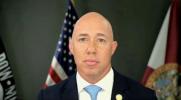
House Foreign Affairs Committee Chairman Rep. Brian Mast issued a direct and highly public warning to Iran’s Supreme Leader Ayatollah Ali Khamenei, declaring that the United States is closely monitoring the regime’s violent crackdown on its own population and is prepared to act if necessary to stop the killing of civilians. Speaking during a Fox News interview, Mast stated plainly that “Ayatollah Khamenei is on notice,” emphasizing that America has no hesitation in taking decisive steps when mass atrocities are unfolding.
Mast’s remarks come amid escalating nationwide protests across Iran that began in late December 2025, driven by economic collapse, government corruption, and long-standing human rights abuses. According to multiple reports cited by U.S. officials and international observers, more than 5,000 Iranians have been killed as security forces intensified their response to demonstrations spanning dozens of cities. The regime has imposed widespread restrictions, including communications blackouts and martial law–style measures, in an effort to suppress dissent.
The congressman framed the situation as a moral and strategic issue, warning that the international community cannot ignore the scale of the violence. While Khamenei has recently acknowledged that “thousands” have died, he has sought to deflect responsibility by blaming foreign interference from the United States and Israel, a claim that has been widely rejected by Western governments and human rights organizations.
Mast’s statement reflects growing bipartisan concern in Washington over Iran’s actions and adds pressure on the administration to maintain a firm posture toward Tehran. The warning also aligns with broader calls from U.S. allies and institutions, including the European Parliament, condemning the regime’s use of lethal force against civilians.
By placing Iran’s leadership “on notice,” Mast underscored a clear message: the United States is watching closely, and continued brutality against the Iranian people will not be met with indifference. His remarks signal that accountability, deterrence, and the protection of basic human rights remain central to U.S. foreign policy amid the ongoing crisis in Iran.
