א איראנע קאמענד צענטער ווערט חרוב אינמיטן אפעראציע עפיק פיורי
גאלערי
ווידעאס
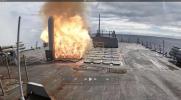
The United States carried out a sweeping military operation on February 28, 2026, targeting the core command infrastructure of Iran’s Islamic Revolutionary Guard Corps, with U.S. Central Command confirming that the group’s headquarters was destroyed in a coordinated series of precision strikes. The action, conducted under presidential direction as part of Operation Epic Fury, represents one of the most consequential blows against the IRGC in its four-decade history and signals a decisive escalation in Washington’s campaign to dismantle Iran’s military command networks.
U.S. officials framed the operation as a response to the IRGC’s long record of lethal activity against American personnel and interests. Over the past 47 years, Iran’s elite military organization has been linked to attacks that killed more than 1,000 U.S. service members and civilians, primarily through the provision of advanced weaponry, training, and operational support to proxy militias across the Middle East. By striking the headquarters that coordinated many of these external operations, U.S. planners aimed to disrupt the IRGC’s strategic planning, intelligence fusion, and command-and-control capabilities.
According to CENTCOM briefings, the operation involved simultaneous strikes on multiple high-value nodes associated with the IRGC’s senior leadership and operational planning apparatus. The targeting package was developed through multi-source intelligence, including signals, geospatial, and human intelligence, enabling precision engagement designed to neutralize command facilities while limiting collateral damage. The destruction of a centralized headquarters imposes immediate operational friction, forcing surviving elements to disperse, rely on redundant communication channels, and operate with reduced coordination.
From a strategic perspective, the elimination of a primary command hub significantly degrades the IRGC’s ability to synchronize activities among its regional proxies, including groups that have historically targeted Israel and U.S. positions. The headquarters functioned not only as an administrative center but as a nerve hub for planning missile deployments, managing logistics, and directing asymmetric warfare campaigns. Its loss complicates Iran’s capacity to execute complex, multi-theater operations in the near term.
The operation also serves as a broader demonstration of U.S. military reach and technological superiority. Conducting a large-scale strike deep inside Iranian territory against hardened and defended facilities required integrated planning across air, cyber, and intelligence domains. The ability to penetrate layered defenses and deliver precise effects against leadership infrastructure underscores the United States’ capacity to hold at risk even the most protected adversarial assets.
Supporters of the operation argue that it restores deterrence after years of IRGC-backed attacks on American forces and allies, particularly Israel, while sending a clear message that state-sponsored proxy warfare carries direct consequences. The action aligns with a doctrine that prioritizes the disruption of command networks rather than solely targeting fielded units, thereby reducing the adversary’s ability to regenerate operational momentum.
The regional implications are substantial. Israel, long a primary target of IRGC-directed activities, stands to benefit from the degradation of Iran’s external operations command. Gulf partners hosting U.S. bases may also experience a reduced immediate threat environment as Iranian coordination capacity is temporarily constrained. However, analysts caution that the IRGC’s decentralized structure and ideological framework mean that retaliatory efforts through proxy channels remain a possibility, even as centralized control is weakened.
Operation Epic Fury marks a defining moment in the current confrontation, combining symbolic impact with tangible military effect. The destruction of the IRGC headquarters represents both a tactical achievement and a strategic signal: the United States is prepared to target the institutional core of organizations responsible for sustained attacks on Americans. Whether this action compels a recalibration in Tehran’s posture or triggers further escalation will shape the next phase of regional security dynamics, but the immediate outcome is clear—the command center of Iran’s most powerful military arm has been removed from the battlefield.
