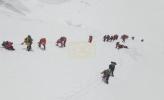
מענטשן קריכן ארויף די עווערעסט בארג
גאלערי
ווידעאס
High above the clouds, where oxygen is scarce and survival depends on constant forward movement, Mount Everest has developed a deadly problem: traffic jams in the death zone.
At elevations above 8,000 meters, climbers operate on borrowed time. The human body cannot acclimate to the lack of oxygen, and every minute spent standing still increases the risk of cerebral edema, pulmonary edema, frostbite, or sudden collapse. Yet a single stalled climber in this narrow corridor can bring dozens of others to a halt for hours.
Video footage narrated by veteran rescuer Simone Moro illustrates how congestion near the summit creates cascading delays. Fixed ropes, steep terrain, and limited passing space mean climbers are forced to wait in line, often while their oxygen supplies dwindle and their strength fades. In these conditions, even minor setbacks can quickly become fatal.
The problem has intensified as commercial expeditions continue to expand. Inexperienced climbers, drawn by the promise of a guided ascent, are paying tens of thousands of dollars for a chance to summit despite lacking high-altitude expertise. The result is a growing number of climbers reaching the death zone without the speed, conditioning, or decision-making skills required to move efficiently.
In 2024 alone, twelve climbers died on Everest during a season that saw roughly 900 summit attempts—far exceeding the historical average of annual fatalities. Many of those deaths were linked not to sudden storms or avalanches, but to exhaustion, altitude sickness, and prolonged exposure caused by overcrowding.
The world’s highest mountain has become a stark example of how commercialization and human ambition can overwhelm natural limits. On Everest, there is no room for gridlock, and every delay carries a cost that can never be recovered.
