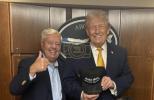
לינדזי גרעהעם האט א נייע היטל מעיק איראן גרעיט עיגען...
גאלערי
ווידעאס
Republican Senator Lindsey Graham drew national attention after appearing on Fox News wearing a “Make Iran Great Again” hat, a deliberate and symbolic play on President Trump’s iconic MAGA slogan. During the appearance, Graham stated, “I pray and hope that 2026 will be the year that we make Iran great again,” a remark widely interpreted as a call for regime change in Tehran and support for the Iranian people’s ongoing resistance to the Islamic Republic.
Graham’s statement aligns with his long-standing position as one of Congress’s most vocal critics of the Iranian regime. Over the years, he has consistently advocated for a hardline approach toward Tehran, including support for military pressure, maximum sanctions, and open backing of opposition movements seeking to dismantle the current theocratic system.
The timing of Graham’s remarks is significant. Iran continues to face internal unrest, with persistent protests driven by economic collapse, political repression, and widespread public dissatisfaction. At the same time, the Trump administration has sent increasingly clear signals that it stands with Iranian dissidents and rejects any return to appeasement policies that critics say empowered the regime under previous administrations.
By invoking the language and symbolism associated with President Trump, Graham underscored a broader strategic message: a “great” Iran would be one free from clerical rule, terrorism sponsorship, and regional aggression. His framing positions regime change not as an act of conquest, but as an outcome of empowering the Iranian people to reclaim their country from an entrenched authoritarian elite.
Supporters argue that this approach reflects lessons learned from past decades, in which diplomatic concessions failed to moderate Tehran’s behavior. Instead, they see sustained pressure and clear moral alignment with the Iranian population as the most credible path to lasting change and regional stability, particularly for U.S. allies such as Israel.
While critics accuse Graham of recklessness, his comments resonate with a growing segment of policymakers who believe the Iranian regime is weaker than it appears and vulnerable to collapse if external pressure and internal resistance converge. As tensions with Iran remain elevated, Graham’s statement adds to the momentum behind a more assertive U.S. posture — one that openly envisions a post-regime future for Iran.