NTSB איז מסביר פארוואס מען האט נישט געקענט פארמיידן א עקסידענט
גאלערי
ווידעאס
The National Transportation Safety Board has released a detailed animation reconstructing the final three minutes before the deadly midair collision near Washington, D.C., offering the clearest explanation to date of why standard “see-and-avoid” procedures failed. The collision, which occurred in January 2025 near Reagan National Airport, involved a U.S. Army Black Hawk helicopter and a PSA Airlines CRJ700 regional jet, killing all 67 people on board in the deadliest U.S. aviation disaster in more than two decades.
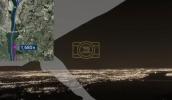
The eight-minute NTSB animation simulates cockpit views from both aircraft during the critical moments before impact. It demonstrates how nighttime conditions, intense urban lighting, and the helicopter crew’s use of night vision goggles severely limited visual awareness. According to the reconstruction, the commercial jet was visible to the helicopter crew for only about 18 seconds before the collision, a window far too brief to allow for effective visual avoidance or evasive maneuvering.
The animation also illustrates how glare from city lights and reflections blended aircraft lighting into the background, making it nearly impossible for either crew to accurately judge position and closure rates. Despite radio communications and compliance with existing flight procedures, neither crew had sufficient visual or situational information to prevent the collision.
NTSB investigators emphasized that the tragedy was not the result of a single error but rather a series of systemic failures. These include the continued allowance of military helicopter routes beneath commercial final approach paths in highly congested airspace, as well as the absence of affordable, GPS-based collision avoidance technology for helicopters comparable to the Traffic Collision Avoidance System used by commercial aircraft.
The findings underscore long-standing concerns about airspace design around major U.S. airports and raise urgent questions about why known safety gaps remained unaddressed. Investigators indicated that the animation is intended not only to explain what happened, but to highlight preventable risks that, if left unresolved, could lead to future tragedies.
