טרעזשורי סעקרעטאר בעסענט דרינגט פאר רואיגקייט צווישן וואקסנדע האנדל שפאנונגען.
גאלערי
ווידעאס
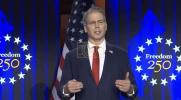
Treasury Secretary Scott Bessent delivered a clear warning to U.S. trading partners, cautioning that escalation against the United States would be the worst possible response amid rising global trade tensions. Recalling remarks he made on April 2, 2025, Bessent urged countries to remain calm and allow negotiations and policy developments to unfold rather than reacting impulsively.
“As I said on April 2nd, the worst thing countries can do is escalate against the United States,” Bessent said. “Sit back, take a deep breath, and let things play out.” His comments immediately drew comparisons to the period preceding President Trump’s so-called “Liberation Day” tariffs in 2025, which triggered a sharp and immediate market reaction, including a drop of more than two percent in the S&P 500.
At the time, the sudden sell-off reflected investor anxiety over the scope and speed of the tariffs, even as administration officials argued that the measures would ultimately strengthen U.S. economic leverage. In hindsight, many analysts concluded that panic selling amplified volatility, rewarding short-term fear rather than disciplined, long-term positioning.
Bessent’s latest remarks come as investors weigh whether current disputes, including renewed tariff threats tied to strategic and geopolitical disagreements, could spark a repeat of that market turmoil. The central question now is whether markets will once again react emotionally or heed the lesson of 2025, when rapid selling proved costly for those who exited positions too quickly.
By emphasizing patience, Bessent reinforced the administration’s broader message that the United States holds significant leverage in trade negotiations and that measured responses tend to outperform reactive moves. For investors, the warning carries a familiar implication: in periods of uncertainty driven by policy headlines, restraint and perspective may be more valuable than speed.
As global tensions evolve, Bessent’s comparison to “Liberation Day” serves as both a reminder and a signal. Governments that escalate risk consequences, while investors who panic may once again find that the worst decision is abandoning strategy in the face of short-term volatility.
