זעלענסקי דערקלערט זיג אז רוסלאנד'ס אינוואזיע איז דורעכגעפאלן
גאלערי
ווידעאס
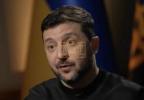
Ukrainian President Volodymyr Zelensky marked the fourth year of Russia’s full-scale invasion with a defiant message: Ukraine’s continued independence constitutes a victory. In a February 25 interview, Zelensky emphasized that Russia failed in its primary objective to occupy and subjugate the country, arguing that national survival in the face of overwhelming military pressure represents a strategic and moral triumph for Kyiv.
Since the launch of the invasion in 2022, Russian forces have suffered significant personnel and equipment losses while failing to achieve decisive control over Ukraine’s political center or dismantle its state institutions. Ukrainian resistance, supported by Western military aid and domestic mobilization, prevented the rapid collapse that many analysts initially predicted. Zelensky framed this outcome as proof that Moscow’s campaign did not achieve its core war aims, reinforcing his narrative that endurance itself has shifted the balance of legitimacy in Ukraine’s favor.
The Ukrainian leader also accused Russia of deliberately prolonging the conflict by stalling peace negotiations while continuing military operations along multiple fronts. According to Zelensky, Moscow’s approach seeks to exploit battlefield attrition and political fatigue among Ukraine’s partners rather than pursue a genuine diplomatic settlement. This assessment reflects Kyiv’s broader concern that prolonged warfare benefits Russia’s larger population base and industrial capacity unless countered by sustained international support.
Zelensky’s remarks come amid renewed discussion about potential shifts in U.S. policy should President Donald Trump return to office, a factor that introduces additional uncertainty into the strategic calculus of all parties involved. Ukraine has relied heavily on American security assistance, and any recalibration in Washington’s approach could influence both battlefield dynamics and the prospects for negotiations. By highlighting Ukraine’s resilience, Zelensky appears to be reinforcing the argument that continued support yields tangible results and prevents Russian expansion.
At the same time, the characterization of survival as victory underscores the war’s transformation from a rapid maneuver conflict into a protracted struggle defined by territorial stalemate, economic strain, and political endurance. While Ukraine has preserved its sovereignty and regained portions of occupied territory, large areas remain contested, and the human and material costs on both sides continue to mount. Zelensky’s framing reflects a strategic communications effort aimed at maintaining domestic morale, sustaining international backing, and countering narratives that portray the conflict as unwinnable.
Four years into the war, Ukraine’s position remains one of determined resistance rather than decisive resolution. Zelensky’s declaration signals that Kyiv measures success not solely by territorial recovery but by the preservation of statehood, democratic institutions, and the ability to resist coercion from a larger adversary. Whether this posture can translate into a negotiated settlement or a more favorable military balance will depend on external support, internal resilience, and the evolving geopolitical environment.
