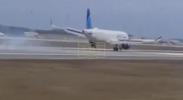
א ערעפלאן קען נישט געהעריג לאנדן צוליב די שטארקע ווינטן
גאלערי
ווידעאס
United Airlines Flight UA2323, operated by an Airbus A321neo, experienced a rare landing gear incident at Orlando International Airport on January 18, 2026, after encountering severe wind conditions during landing. The aircraft, arriving from Chicago with approximately 200 passengers onboard, made an unstable touchdown amid wind gusts exceeding 50 miles per hour.
Video footage from the runway shows the aircraft bouncing on landing before veering slightly, at which point the right nose wheel separated from the axle of the nose landing gear. Despite the mechanical failure, the flight crew maintained control of the aircraft, which slowed and came to a complete stop on the runway without further incident. No injuries were reported among passengers or crew.
Airport officials immediately initiated a temporary ground stop at Orlando International Airport as a precaution while emergency crews assessed the runway and aircraft. Passengers were safely deplaned, and airport operations resumed after safety checks were completed.
The Federal Aviation Administration has opened an investigation into the incident, focusing on the performance of the nose landing gear under extreme crosswind and load conditions. While nose gear separations attract public attention, such events remain highly uncommon. According to National Transportation Safety Board records, fewer than ten comparable incidents have been documented in the United States since 2010.
Aviation experts note that strong crosswinds can place significant stress on landing gear assemblies, particularly during hard or bounced landings. Factors such as gear shimmy, side-load forces, and overload stress are often reviewed during post-incident analysis. In this case, pilots are being credited with effective crosswind handling that prevented escalation and ensured passenger safety.
United Airlines has stated it is cooperating fully with federal investigators and conducting its own internal review. The aircraft has been removed from service pending inspection, as required under aviation safety protocols.
The incident underscores both the challenges of operating in extreme weather and the resilience of modern aviation systems, where trained crews and established safety procedures continue to protect lives even when rare mechanical failures occur.
