הונדערטער עלעקטראנישע ביציקלעך פלאקערן אין טשיינע
גאלערי
ווידעאס
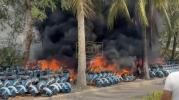
A dramatic fire involving hundreds of electric bicycles broke out in Hainan province, China, on April 13, 2026, sending thick black smoke into the sky and drawing widespread attention. Videos captured by bystanders show rows of light blue scooters parked along a palm-lined street rapidly engulfed in flames. The intensity of the blaze suggests a chain reaction, likely fueled by the concentration of lithium-ion batteries within the parked vehicles. Emergency responders were seen attempting to contain the fire as it spread across the tightly packed area.
Preliminary assessments point to lithium-ion battery failure as a probable cause, a recurring issue in China’s rapidly expanding e-bike sector. Thermal runaway, a condition where battery cells overheat uncontrollably, can lead to explosive ignition, especially when lower-quality components or unsafe modifications are involved. Improper charging practices, including indoor charging or use of uncertified equipment, have also been identified as contributing factors in similar incidents. These risks are amplified in high-density parking environments like the one seen in Hainan.
China remains the global leader in electric bicycle usage, with millions of units sold annually and widely used for urban transportation. In provinces like Hainan, shared scooter systems and mass parking zones are common, increasing the likelihood of large-scale incidents when fires occur. The clustering of vehicles creates a scenario where a single battery failure can quickly escalate into a widespread blaze. This structural vulnerability has made such fires an ongoing safety concern in densely populated areas.
In response to repeated incidents, Chinese authorities introduced updated national safety standards in 2025 aimed at reducing fire risks. These regulations focus on limiting flammable materials in battery construction, improving manufacturing quality, and enforcing stricter charging protocols. While these measures are intended to mitigate hazards, enforcement and compliance remain key challenges. Incidents like this latest fire highlight the gap between regulatory frameworks and real-world conditions.
The Hainan fire serves as another stark reminder of the safety challenges associated with lithium-ion battery technology in mass transit applications. As electric mobility continues to expand, balancing convenience with safety will remain a critical issue for regulators and manufacturers alike. Authorities are expected to investigate the exact cause of the fire and assess whether safety standards were followed. The outcome may influence future policy adjustments and enforcement strategies in China’s e-bike industry.
