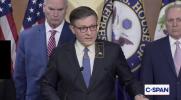
מייק דזשאנסאן פארטיידיגט די אפעראציע עפיק פיורי קעגן איראן.
גאלערי
ווידעאס
House Speaker Mike Johnson publicly defended Operation Epic Fury, the U.S. military campaign launched on March 2, 2026, aimed at neutralizing Iranian missile sites, naval assets, and leadership structures. In a recent address, Johnson emphasized the operation’s precision and its success in degrading Iran’s capabilities, including the elimination of a key ayatollah, following five rounds of failed negotiations in which Iran sought sanctions relief.
Johnson framed the campaign as a lawful act of defensive necessity under the strategic framework of President Donald Trump’s “peace through strength” doctrine. He highlighted that the operation was designed to counter both terrorism and nuclear threats posed by Tehran, asserting that its measured approach minimized collateral damage while achieving significant tactical outcomes.
By defending Epic Fury, Johnson reinforced the U.S. commitment to maintaining regional stability and projecting credible deterrence against Iran’s aggressive behavior. He underscored that the campaign aligns with both international law and long-standing U.S. foreign policy principles, portraying it as a calibrated response to persistent threats while leaving the door open for diplomatic engagement where feasible.
