סעקרעטאר רוביא דערקלערט די יו.ען. אלס נישט מעכטיג איבער גרויסע גלאבאלע קריזיסן.
גאלערי
ווידעאס
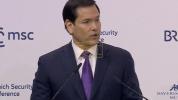
U.S. Secretary of State Marco Rubio delivered a sharp critique of the United Nations during remarks at the Munich Security Conference, arguing that the international body has failed to produce meaningful solutions to some of the world’s most pressing conflicts, including Gaza, Ukraine, Iran, and Venezuela. Rubio contrasted what he described as institutional paralysis with what he portrayed as decisive American leadership under the current administration.
In his address, Rubio stated that the United Nations has been unable to end the war in Gaza or halt Russia’s invasion of Ukraine, framing these outcomes as evidence of structural dysfunction within the multilateral system. He argued that while global institutions issue statements and convene meetings, real progress has come from targeted actions led by sovereign nations willing to use diplomatic, economic, and military leverage. His remarks reflect a broader shift toward a more nation-centered foreign policy that prioritizes strategic results over consensus-driven processes.
Rubio highlighted several areas where he said U.S. policy has produced tangible outcomes, including hostage recovery operations, pressure campaigns against adversarial regimes, and the use of force to deter threats from Iran-backed actors. He portrayed these measures as examples of a results-oriented doctrine that rejects what he characterized as symbolic diplomacy. According to Rubio, the credibility of international institutions has been undermined by their inability to enforce resolutions, prevent aggression, or hold authoritarian governments accountable.
The secretary’s comments also called for reform of global governance structures, arguing that organizations created in the aftermath of World War II have not adapted to modern geopolitical realities. He suggested that national interests, rather than abstract global frameworks, should guide decision-making in an era defined by great-power competition, proxy warfare, and the proliferation of non-state armed groups. In this view, alliances remain important, but they must be aligned with clear strategic objectives rather than procedural multilateralism.
Rubio’s speech comes amid ongoing debates over burden-sharing, sanctions enforcement, and the effectiveness of international mediation in conflicts involving Iran and its regional network. By emphasizing American primacy and operational capability, the address signals continued support for a doctrine that combines economic pressure, military readiness, and selective diplomacy as the primary tools for managing global crises.
The remarks were received as a direct challenge to the existing multilateral order and a reaffirmation of a foreign policy framework that places U.S. power at the center of conflict resolution. As negotiations and ceasefire efforts continue in multiple theaters, Rubio’s message underscores the administration’s position that outcomes, not processes, will define the effectiveness of international engagement.
