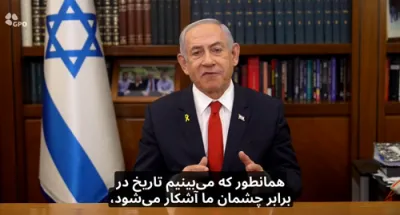
נתניהו דערקלערט אז עס גייט נישט זיין קיין פאלעסטינער מדינה, ווייל מדינת ישראל שטעלט רויטע ליניעס פאר סעקיורעטי
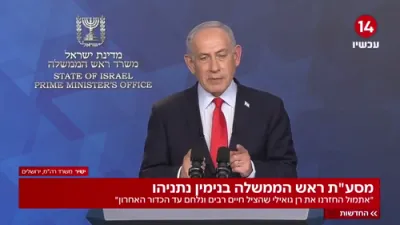
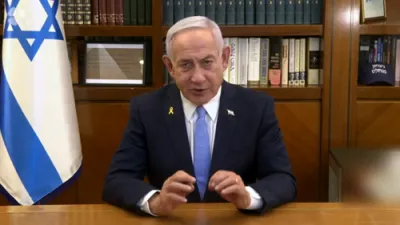
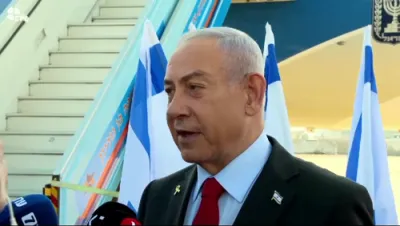
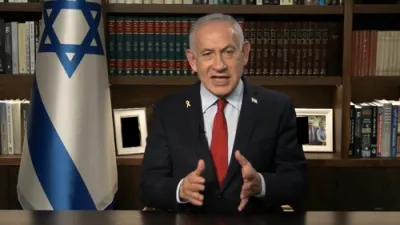
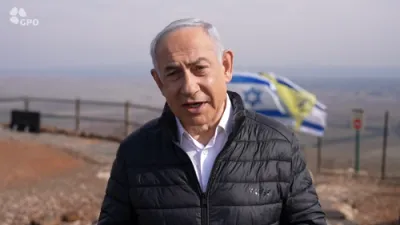
Israeli Prime Minister Benjamin Netanyahu delivered an unequivocal message during a January 28, 2026 press conference, stating flatly that “there will not be a Palestinian state.” His remarks removed any ambiguity about Israel’s position following more than two years of war and security upheaval since the Hamas-led attacks of 2023, and they reaffirmed the direction of his governing coalition’s long-standing policy.
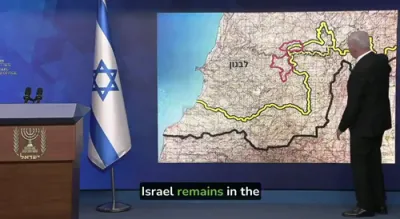
Netanyahu emphasized that Israel will maintain full security control from the Jordan River to the Mediterranean Sea, arguing that past efforts to establish a Palestinian state resulted not in peace but in repeated waves of terrorism and instability. He pointed to decades of rejected peace offers and withdrawals that, in his view, emboldened extremist groups rather than producing coexistence. According to the prime minister, the October 2023 Hamas attacks confirmed that relinquishing security control poses an existential threat to Israel.
The statement explicitly rejected the idea of a Palestinian state emerging from Gaza, even under international sponsorship or reconstruction frameworks proposed by foreign actors. Netanyahu dismissed involvement by countries such as Qatar or Turkey, maintaining that outside guarantees have repeatedly failed to prevent Hamas from militarizing civilian areas and using Gaza as a base for attacks against Israel.
Central to Netanyahu’s position is the prioritization of Hamas’s complete destruction and Gaza’s permanent demilitarization before any discussion of political restructuring. He argued that rebuilding without first eliminating terror infrastructure would simply recreate the conditions that led to war. For Israel, he said, security is not a negotiating point but a prerequisite for survival.
The prime minister’s remarks align closely with the platform of his current coalition, which has consistently opposed the creation of a Palestinian state and framed the conflict as one between a democratic state defending itself and terrorist organizations committed to its destruction. Supporters view Netanyahu’s clarity as overdue realism after decades of failed diplomatic assumptions, while critics abroad argue it closes the door on traditional peace frameworks.
Netanyahu’s declaration marks a defining moment in Israel’s postwar posture, signaling that future policy will be driven by hard security realities rather than international pressure or theoretical agreements. As regional tensions persist and Israel continues operations aimed at dismantling Hamas, his message underscores a belief widely held within Israel’s leadership that peace cannot be built on concessions that leave the country vulnerable to renewed attacks.