איראן שטעלט ארויס באליסטישע ראקעטן אויף אונטערערדישע באזעס.
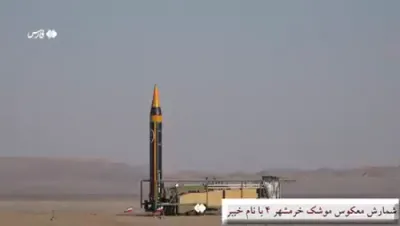
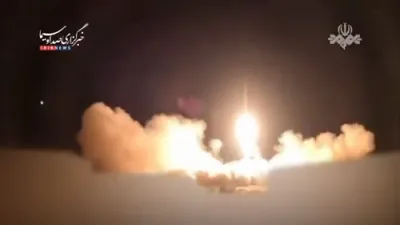
Iran’s state‑affiliated Fars News Agency announced that the country has deployed its Khorramshahr‑4 ballistic missile to underground launch bases nationwide, marking what Tehran described as the first operational phase of the weapon. According to the report, the missile — one of the Islamic Republic’s most advanced systems — is now positioned in hardened underground facilities to strengthen deterrence and response options amid heightened regional tensions.
Iranian media claims the Khorramshahr‑4 has a range of about 2,000 kilometers and can carry a large warhead, potentially allowing it to strike targets across the Middle East, including Israel, from deep within Iranian territory. Officials cited in the report said the missile’s speed — allegedly reaching up to 16 times the speed of sound outside the atmosphere and around 8 Mach during re‑entry — would significantly shorten flight times toward distant targets such as Israeli territory.
The Khorramshahr‑4 — also known as “Kheibar” in Iranian military parlance — was unveiled publicly in mid‑2023 and represents a fourth‑generation evolution of Iran’s medium‑range ballistic missile family. It is liquid‑fueled with an estimated 1,500‑kilogram warhead capacity and a roughly 2,000 km engagement envelope, putting major regional capitals within reach under its design parameters.
Tehran has repeatedly showcased its underground “missile cities,” widely believed to be hardened, subterranean complexes designed to protect and disperse its strategic missiles in the face of potential preemptive strikes. Prior satellite analyses and independent reporting have documented multiple such facilities in various provinces that house larger Iranian ballistic systems capable of reaching U.S. interests and allied partners in the region.
Iran’s Revolutionary Guard Corps has framed the introduction of the Khorramshahr‑4 into its operational inventory as a deterrent against external threats, particularly as tensions with Israel and the United States continue to simmer over nuclear developments and proxy engagements. While independent verification of the deployment is limited due to the secrecy surrounding Iranian strategic assets, state media’s emphasis on underground readiness reflects Tehran’s desire to signal resilience and preparedness to both domestic and international audiences.