בלויע סטעיטס וועלן פארלירן עלעקטארעל וואויטס נאך די נייע צענזוס אין 2030
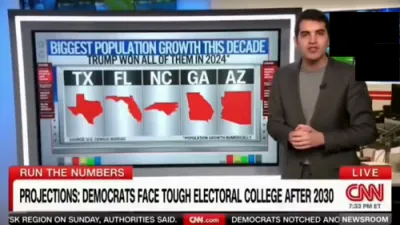
New population projections tied to the 2030 census are already reshaping the political landscape, with Republican-leaning states positioned to gain representation in Congress and the Electoral College while several Democratic strongholds face measurable losses. The estimates suggest that Texas and Florida could each add multiple House seats, while states such as California, New York, and Illinois are on track to surrender representation due to slower population growth and continued domestic outmigration.
Because Electoral College votes are directly linked to congressional apportionment, even modest seat changes can produce meaningful national consequences. Current projections indicate a potential net shift of several electoral votes toward states that have favored Republican presidential candidates in recent cycles. In a system where the path to 270 is often determined by narrow margins, these structural changes could alter campaign strategies, battleground calculations, and resource allocation well before the first ballots are cast in the next decade.
Analysts point to sustained domestic migration patterns as a primary driver. Over the past several years, millions of Americans have relocated from high-cost coastal states to faster-growing Sun Belt regions, citing lower taxes, more affordable housing, and expanding job markets. States like Texas, Florida, North Carolina, Georgia, and Arizona have absorbed much of this population growth, translating into increased political weight. Meanwhile, states with higher living costs and slower economic expansion have seen population stagnation or decline, reducing their share of representation.
This demographic redistribution carries strategic implications for both parties. For Republicans, additional seats in growth states reinforce an already favorable geographic coalition and could expand the Electoral College map in ways that reduce reliance on traditional Midwestern battlegrounds. For Democrats, the trend raises the threshold for assembling a winning coalition, potentially requiring stronger performances in competitive states or policy shifts aimed at reversing outmigration and retaining population centers.
Despite the trajectory, the outcome is not predetermined. Immigration patterns, economic cycles, housing policy reforms, and state-level governance decisions could still influence population flows before the census is finalized. Reapportionment also depends on the precise count conducted in 2030, meaning current projections function as directional indicators rather than fixed outcomes. Political parties will likely respond with targeted efforts to attract residents, expand voter registration, and adapt messaging to emerging demographic realities.
The broader significance lies in how population movement is translating into institutional power. Congressional seats determine legislative influence, committee representation, and federal funding leverage, while Electoral College votes shape presidential pathways. As Americans continue to relocate in search of opportunity and affordability, the political map is evolving alongside them, setting the stage for a potentially rebalanced national contest in the decade ahead.