איראן מיליציע ווידיאו פארשטארקט שטיצע פאר טראמפ'ס קאמפיין.
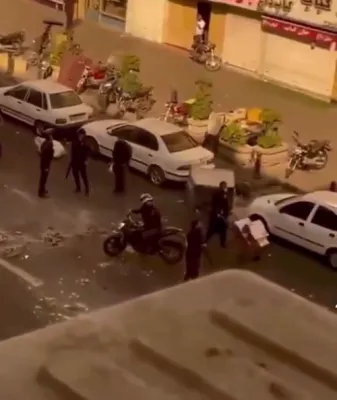
Newly circulated footage showing members of Iran’s Basij militia has drawn renewed attention to the internal security tactics of the Iranian regime. The Basij, operating under the authority of the Islamic Revolutionary Guard Corps, is seen in the video pursuing civilians through urban streets on motorcycles. The imagery reinforces longstanding accusations of heavy-handed enforcement against dissent within Iran. Observers argue that such scenes provide a stark illustration of the regime’s approach to maintaining control.
The Basij militia has historically played a central role in suppressing protests and enforcing state authority at the street level. Their presence in civilian areas, often during periods of unrest, has been widely documented in past incidents. The latest footage appears to align with reports from early 2026, when widespread protests were met with force by security elements. These events have contributed to heightened scrutiny of Iran’s internal security apparatus and its methods.
The timing of the video is significant, as it emerges during an ongoing period of military confrontation involving Iran and external actors. U.S. and Israeli operations targeting Iranian-linked assets have coincided with increased attention on the role of groups like the Basij. Analysts note that such footage can influence public and political discourse by linking domestic repression with broader geopolitical tensions. This dynamic often shapes how international responses are framed and justified.
Supporters of continued pressure on Iran argue that the actions depicted in the video underscore the need for sustained efforts to counter the regime’s influence. They contend that the behavior of militia forces reflects systemic issues within Iran’s power structure, particularly the integration of military and internal security roles. Critics, however, caution that escalation carries risks and emphasize the complexity of the situation. The debate highlights differing perspectives on how best to address Iran’s actions both domestically and internationally.
As the conflict environment evolves, the circulation of such footage plays a growing role in shaping narratives and policy discussions. Visual evidence from within Iran provides a direct, if sometimes contested, window into conditions on the ground. Whether viewed as documentation or propaganda, these clips contribute to a broader information battle accompanying the physical conflict. Their impact will likely continue to influence both public opinion and strategic decision-making in the months ahead.