סעקרעטאר בעסענט ווארנט אז גרינלאנד איז שוואך אן אמעריקאנער שוץ.
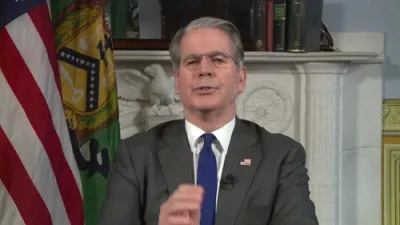
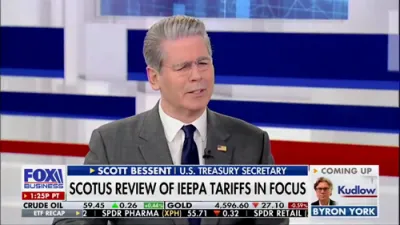
Trump administration Treasury Secretary Scott Bessent made a forceful case for U.S. control of Greenland, arguing that the Arctic territory can only be properly defended if it is part of the United States. Speaking during a national television interview, Bessent stated that Greenland would not require defense at all under U.S. sovereignty, asserting that American control would deter foreign threats before they materialize.
Bessent framed the issue as a matter of national and global security, warning that Greenland’s strategic position makes it a prime target for Russian and Chinese expansion in the Arctic. He drew comparisons to intelligence failures preceding Russia’s invasion of Ukraine, arguing that Western governments often underestimate asymmetric threats until it is too late. According to Bessent, allowing such gaps to persist in the Arctic would be a serious strategic mistake.
The remarks align with President Trump’s broader effort to reassert American dominance in key global chokepoints and counter adversarial powers exploiting European indecision. Greenland’s location places it at the center of emerging Arctic trade routes, missile defense considerations, and early-warning systems, making it a critical asset in modern great-power competition.
Bessent’s comments also intersect with the administration’s ongoing pressure campaign against several European Union nations opposing any transfer of Greenland from Denmark. The White House has signaled that economic tools, including tariffs, remain on the table to compel European leaders to confront what U.S. officials view as chronic underinvestment in collective defense and Arctic security.
Denmark’s prime minister has rejected the administration’s position, accusing Washington of coercion and insisting that Europe will not accept what she characterized as political blackmail. However, U.S. officials counter that Europe has repeatedly relied on American military protection while resisting strategic decisions that would strengthen long-term deterrence.
Supporters of the administration argue that Bessent’s remarks reflect a clear-eyed assessment of geopolitical reality. They contend that U.S. control of Greenland would eliminate ambiguity, deny adversaries a foothold in the Arctic, and reinforce Western security far more effectively than fragmented European oversight.
As tensions rise in the Arctic and global power competition accelerates, the Trump administration’s position signals a return to hard-nosed strategic thinking—prioritizing deterrence, clarity, and American leadership over diplomatic hesitation.